
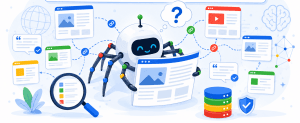
Your website is ready to be cited by AI search engines when AI systems can crawl it, understand it, verify your expertise, and confidently extract useful answers from your pages. That means your content needs to be clear, structured, specific, technically accessible, and trustworthy.
Not just “optimized.” Actually useful.
An effective AI search readiness checklist looks at your technical SEO, page structure, internal links, schema, business information, topical authority, and proof signals. The goal is not to game AI tools. The goal is to make your website the clearest and most reliable source when potential customers ask questions about your services, industry, pricing, process, or local expertise.
What does AI search readiness mean for your website?
AI search readiness means your website is prepared for a search experience where users may receive direct answers instead of a traditional list of blue links. Tools like Google AI Overviews, AI Mode, ChatGPT Search, Perplexity, Gemini, and other AI-powered engines look for content they can understand, summarize, and support with citations.
Traditional SEO still matters. A lot. Google states that the same foundational SEO best practices remain relevant for AI features in Search, including crawlability, helpful content, internal linking, page experience, and making important content available in text form.
The difference is emphasis.
In classic SEO, the focus is often ranking a page. In AI search readiness, the focus expands to whether your content is clear enough to become part of the answer. That requires strong technical foundations, but also direct explanations, credible details, and well-organized pages that make your business easy to understand.
How do AI search engines decide what to cite?
AI search engines typically retrieve information from multiple sources, compare it, and synthesize it into a conversational response. The citations they show are often the sources that best support the answer being generated.
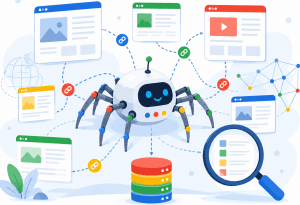
That means your website needs to do more than mention a keyword. It needs to demonstrate relevance, authority, and clarity around a topic.
WP Engine describes AI citation factors as including topical authority, brand trust, technical accessibility, content depth, structured data, and clear page structure. It also notes that AI search systems rely heavily on technically sound, authoritative websites to support generated answers.
And not every AI engine behaves the same way. Conductor’s research tracked citation behavior across several AI search products and found that different engines showed different source preferences. In other words, one generic “AI SEO” strategy is not enough.
A better approach: build a website that is easy to crawl, easy to quote, easy to trust, and useful across multiple search environments.
What should your AI search readiness checklist include?
Start with the basics. Then go deeper.
Crawlability and indexability
Check whether your important pages can be crawled and indexed. Review robots.txt, noindex tags, canonical tags, XML sitemaps, server errors, redirects, and blocked resources. Google explains that robots.txt controls which URLs crawlers can access, but it should not be used as the main method for keeping pages out of Search.
Clear page structure
Use one clear H1, descriptive H2s, logical H3s, short answer-first paragraphs, and scannable sections. AI systems and human readers both benefit when the page has a clean information hierarchy.
Strong internal linking
Important pages should not be buried. Connect your homepage, service pages, location pages, and educational content with helpful internal links. For example, a business improving AI visibility may also need a stronger SEO strategy, better digital marketing services, and more conversion-focused content.
Entity clarity
Make your business easy to identify. Include your company name, services, locations, industries served, team expertise, process, and differentiators. Keep these details consistent across your website, Google Business Profile, directory listings, and social profiles.
Helpful, people-first content
Google’s guidance emphasizes helpful, reliable, people-first content that demonstrates expertise, provides original value, and helps readers accomplish their goals. Thin, generic content is harder to trust and easier to ignore.
Structured data where appropriate
Schema can help search engines understand your pages, especially for Organization, LocalBusiness, Service, Article, FAQPage, Review, and Breadcrumb markup. But use it honestly. Google specifically says structured data should match the visible text on the page, and there is no special schema required to appear in AI Overviews or AI Mode.
Proof signals
Add case studies, testimonials, author bios, service examples, original insights, client outcomes, certifications, and specific process details. Show why your business should be trusted.
Conversion paths
AI visibility is valuable, but it should lead somewhere. Make sure users can easily request a quote, book a consultation, call, or learn more.
How can you structure pages so AI can extract clear answers?
Start each important page or section with the answer. Then explain the details.
That simple shift makes a big difference.
Instead of opening with a long setup, answer the user’s question in the first few sentences. Then add context, examples, steps, comparisons, FAQs, and proof. FIU’s guidance on AI-ready content recommends using headings to clearly mark questions and answers, and using FAQs and lists to make information easier for both users and AI tools to summarize.
For service pages, this might mean adding sections like:
- What does this service include?
- Who is this service best for?
- How does the process work?
- What should a customer expect?
- How much does it usually cost?
- What makes your approach different?
Plain. Useful. Specific.
Also, avoid vague statements like “we are the best” unless you support them with evidence. AI systems need facts they can connect and verify. Readers do too.
Why do vague service pages weaken AI visibility?
Vague service pages create uncertainty. And uncertainty is bad for citations.
If your page simply says your company offers “custom solutions,” “high-quality service,” or “results-driven strategies,” AI systems have very little to extract. Those phrases could describe almost any business. They do not explain what you do, who you help, where you operate, or why your approach is credible.
For small businesses, this matters beyond SEO. AI search may influence a buyer before they ever click an ad, visit your site, or search your brand by name. A weak website can reduce trust before a paid campaign even has a chance to convert.
That is why PPC and organic content need to work together. A strong landing page, a useful service page, and clear supporting content can reinforce the message someone sees in paid search. If your business relies on Google Ads, your SEM and PPC strategies should be supported by website content that answers real buyer questions.
How can small businesses improve readiness without rebuilding everything?
You do not need to rebuild your entire website to improve AI search readiness.
Start with the pages that matter most: homepage, top service pages, location pages, highest-traffic blog posts, and contact page. These are the pages AI systems and potential customers are most likely to encounter when trying to understand your business.
Update them in layers.
First, make the page technically accessible. Then improve the headings. Add direct answers. Add FAQs. Strengthen internal links. Include specific service details, local signals, testimonials, and examples. Make sure your phone number, address, service area, and business description are consistent.
For businesses still learning this space, QBall Digital’s resource on Generative Engine Optimization for small businesses can be a helpful next step. It connects the broader AI search shift with practical digital marketing actions.
Small improvements add up. Especially when they are made on the right pages.
How should you measure AI search visibility?
AI search measurement is still evolving, so use a mix of traditional SEO data and manual visibility checks.
Track indexed pages, crawl errors, organic impressions, rankings, conversions, branded search volume, referral traffic, and assisted conversions. Google says sites appearing in AI features such as AI Overviews and AI Mode are included in overall Search Console performance reporting under the “Web” search type.
Then add prompt testing.
Create a simple spreadsheet with your most important buyer questions. For example: “Who offers PPC management for small businesses near me?” or “What should I check before hiring an SEO agency?” Test those prompts across AI search tools monthly. Record whether your brand appears, whether competitors are cited, and what kinds of sources the tool prefers.
This will not be perfect. But it gives you directional insight.
Over time, you should see whether your content is becoming more visible, more useful, and more aligned with the questions your customers actually ask.
FAQ
What is an AI search readiness checklist?
An AI search readiness checklist is a website audit framework that checks whether your pages can be crawled, understood, trusted, extracted, and cited by AI-powered search engines.
Is AI search readiness the same as SEO?
No. SEO is the foundation, but AI search readiness adds more focus on answer clarity, entity consistency, citation potential, structured content, and visibility across AI answer engines.
Do I need schema to appear in AI search results?
Schema can help search engines understand your content, but it is not a magic requirement. Google says there is no special schema.org structured data required to appear in AI Overviews or AI Mode.
Can small businesses be cited by AI search engines?
Yes. Small businesses can improve their chances by publishing clear, specific, trustworthy content that answers customer questions better than generic competitor pages.
How often should I review AI search readiness?
Review your most important pages every quarter. For competitive industries, test priority AI search prompts monthly so you can see whether your brand is appearing, missing, or being outranked by better-structured sources.
What should you do after using this checklist?
Do not try to fix everything at once.
Start with your highest-value pages. Make sure they are crawlable, clearly written, internally linked, and specific about what your business does. Add proof where claims feel unsupported. Improve weak headings. Turn vague paragraphs into direct answers. Strengthen your service pages before publishing another generic blog post.
AI search readiness is not about chasing the next algorithm trick. It is about making your website easier to understand and trust.
That helps search engines. It helps AI systems. Most importantly, it helps real people decide whether your business is the right fit.
Why QBall Digital is Your Ideal Choice for AI Search Readiness?
QBall Digital helps small businesses improve online visibility through SEO, Google Ads, web design, PPC, local SEO, social media, video, and broader digital marketing support. The agency’s own positioning focuses on helping small businesses rank higher, attract customers, and make digital marketing simple and effective.
That combination matters for AI search readiness. A website cannot become citation-worthy through content alone if the technical foundation, user experience, paid strategy, and conversion path are disconnected. QBall Digital brings those pieces together so small businesses can improve visibility while still focusing on leads, revenue, and practical growth.
QBall Digital also brings experience and transparency to the process. The team has over 25 years of experience helping small and midsize businesses with digital marketing tactics that work, and the company highlights custom strategy, monthly calls, and dashboard-based reporting. That is valuable when AI search visibility is still changing and businesses need clear guidance instead of guesswork.
For readers comparing partners, the why choose QBall Digital page is a useful place to learn more about the agency’s approach, values, and small business focus.
Get Your AI Search Readiness Audit With QBall Digital
Ready to see where your website stands?
QBall Digital can review your crawlability, content structure, service pages, internal links, local signals, technical SEO, and conversion paths to identify what may be holding your website back from stronger AI search visibility.
Your customers are already asking better questions. Make sure your website is ready with better answers.