
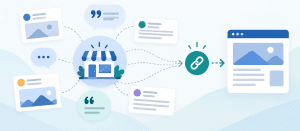
Businesses can turn existing brand mentions into backlinks by finding websites that already reference their company, identifying the mentions with real SEO and audience value, and asking the publisher to add a relevant link to the appropriate page.
That makes unlinked brand mentions SEO a practical form of link reclamation. Instead of convincing an unfamiliar website to talk about your business from scratch, you are contacting a publisher that already knows the brand well enough to mention it. The opportunity already exists. The goal is to make that reference more useful for readers and, when appropriate, turn it into a crawlable link.
The process works best when it is selective. Not every mention deserves outreach, and not every backlink should point to the homepage.
What Counts as an Unlinked Brand Mention Worth Pursuing?
An unlinked brand mention occurs when another website references your company, product, founder, research, event, image, or another recognizable brand asset without providing a clickable link to your website.
Some mentions are much more valuable than others. A company name appearing naturally inside an industry article, news story, resource page, case study, or product comparison may be worth pursuing because the publisher has already established a relevant context for your business.
A mention buried inside spam, scraped content, unrelated directories, or low-quality pages is different. Getting a backlink from every website that mentions you should never be the goal.
Focus first on references that are editorial, relevant, credible, and useful to the audience reading the page.
Why Are Unlinked Brand Mentions Valuable for SEO?
A brand mention and a backlink are not the same thing. A mention can increase awareness and expose the company to new audiences, but a crawlable backlink creates an actual path from the publisher’s website to yours.
Google explains that it uses links to discover new pages and as a signal when determining page relevance. Google also recommends descriptive, contextual anchor text that helps users and search engines understand the destination of a link.
For businesses already investing in search engine optimization services, reclaiming relevant mentions can therefore complement content development, technical improvements, and broader off-page SEO.
The key word is relevant. A contextual backlink from a legitimate publication discussing your business is much more useful than collecting links simply because they are available.
Where Can Businesses Find Unlinked Brand Mentions?
Start with simple searches. Search Google for your exact company name in quotation marks and exclude your own domain. The same process can be used for product names, executive names, proprietary research, branded campaigns, or other terms strongly associated with the company.
Google Alerts can also notify businesses when new search results appear for selected topics, including mentions of a person’s or company’s name. For brands receiving a larger volume of coverage, dedicated brand-monitoring and SEO platforms can make ongoing discovery easier.
Images deserve attention too. If your company publishes original charts, graphics, photographs, or research visuals, reverse-image searches may uncover websites using those assets without linking to the original source.
Monitoring can also support broader online reputation management because brand references reveal where and how other websites are discussing the business.
Which Brand Mentions Should Businesses Prioritize for Backlink Outreach?
Prioritize quality before quantity.
Look at how closely the website relates to your industry, where the mention appears, how naturally a link would fit, whether the publication appears credible, how recent the page is, and whether visitors would gain something by following the proposed link.
Context matters especially. A detailed article quoting your research creates a clearer opportunity than a page that happens to contain the company name in an unrelated sentence.
Local businesses should also recognize the difference between backlinks and citations. A citation can mention basic business information without necessarily containing a link. QBall Digital’s guide to boosting SEO with local citations explains how those mentions can fit into a wider local visibility strategy.
Do not chase a backlink based on a domain metric alone. Ask whether the link would make sense to a real person reading the page.
How Should Businesses Ask Publishers to Add a Backlink?
Keep outreach short, specific, and useful.
Identify the person responsible for the article or website whenever possible. Mention the exact page where your business appears, thank them for including the brand, and suggest one relevant URL they could use if they decide to make the reference clickable.
For example:
“Hi [Name], thanks for mentioning [Brand] in your article about [Topic]. I noticed the reference isn’t currently linked. If it would be useful for readers who want more information, this page provides the relevant details: [URL]. Thanks again for including us.”
No demands. No lengthy sales pitch. No attempt to force keyword-heavy anchor text.
Google’s spam policies also prohibit practices such as buying links for ranking purposes or excessive link exchanges intended to manipulate search results. Natural editorial outreach should stay focused on usefulness rather than manufacturing ranking signals.
Where Should an Earned Backlink Point?
The homepage is not automatically the best destination.
Match the target page to the reason your company was mentioned. If a publisher discusses one of your services, link to the relevant service page. If it quotes a study, direct readers to the original research. If it references an educational concept, the most useful destination may be a detailed guide.
This improves the request because the link answers an obvious reader question: “Where can I learn more about this?”
It also fits a broader digital marketing strategy in which search visibility, useful content, website experience, and conversion paths support each other rather than operating separately.
How Can Businesses Measure Whether Mention Reclamation Is Working?
Track the process from discovery through results.
Useful measurements include the number of qualified mentions found, publishers contacted, backlinks successfully added, new referring domains, referral visits, and performance of the pages receiving links. The most revealing metric is often the conversion rate from qualified outreach to links earned, because it shows whether the team is choosing realistic opportunities.
Monitor new mentions continuously as well. Fresh mentions may be easier to address because the publisher recently worked on the page and the relationship with your brand is still current.
Over time, the data should help answer a bigger question: which kinds of brand coverage consistently create worthwhile backlink opportunities?
FAQ
Are unlinked brand mentions the same as backlinks?
No. An unlinked mention references a brand without a clickable URL. A backlink contains a link that visitors and search engines can follow to another page.
Can unlinked brand mentions help SEO without a link?
Mentions can still contribute to brand visibility, awareness, reputation, and discovery. However, businesses should not assume an unlinked mention functions exactly like a backlink. Google specifically documents crawlable links as a way it discovers pages and evaluates relevance.
What tools can businesses use to find unlinked mentions?
Businesses can start with Google Search and Google Alerts, then use SEO, digital PR, or brand-monitoring platforms when the volume of mentions becomes difficult to manage manually.
How quickly should a business contact a site after being mentioned?
Generally, sooner is better when the opportunity is relevant. A recently published page may still be actively managed, and the author or editor is more likely to remember the context of the reference.
Should every unlinked brand mention be turned into a backlink?
No. Prioritize relevant, credible pages where adding a link would genuinely help the reader. Low-quality or unrelated mentions can simply be left alone.
Make Valuable Brand Mentions Work Harder
Your next backlink opportunity may already be sitting on a website that knows your name.
A consistent process for finding mentions, qualifying them, making thoughtful requests, and tracking results can turn existing brand recognition into stronger connections across the web. Start with the mentions that offer obvious reader value, then build monitoring into your ongoing SEO routine.
Why QBall Digital Is Your Ideal Choice for Unlinked Brand Mention SEO?
QBall Digital approaches unlinked brand mentions SEO as part of a broader search strategy rather than an isolated backlink tactic. Its SEO work incorporates content, link building, technical considerations, local visibility, and measurement so businesses can focus on opportunities that support meaningful growth. You can learn more about the agency’s approach and philosophy on Why Choose QBall Digital.
That broader perspective matters because earning a backlink is only one part of improving search visibility. The destination page needs to be useful, the website needs to support visitors once they arrive, and results need to be tracked against real business objectives. QBall Digital helps connect those pieces so backlink opportunities can support a more complete digital marketing strategy.
Turn More Brand Visibility Into Search Value With QBall Digital
Already being mentioned online? There may be valuable SEO opportunities hiding in plain sight.
Contact QBall Digital to discuss your SEO strategy and identify opportunities to turn relevant brand visibility into stronger website authority, referral traffic, and search performance.