
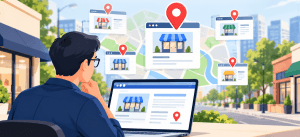
Local Landing pages can rank and convert when they address specific local needs, demonstrate genuine service-area relevance, and make it easy for visitors to contact the business. The goal is not simply to replace city names with neighborhood names. Each page should provide useful information that a broader city landing page cannot fully address.
Start by identifying neighborhoods where your business operates and where potential customers search for your services. Then, develop original content, organize your pages logically, and include clear conversion opportunities.
A well-planned neighborhood page does more than attract search traffic. It helps nearby customers recognize your business as a relevant solution.
What Makes Micro-Neighborhood Pages Different From City Landing Pages?
Micro-neighborhood pages target smaller geographic areas within a city, allowing businesses to address more specific local searches and customer needs.
A city landing page might promote plumbing services throughout Indianapolis. A micro-neighborhood page could focus on homeowners in Broad Ripple or Fountain Square, discussing services, scheduling considerations, and actual work completed in that area.
This distinction matters because nearby customers may have different concerns, even when they need the same service. Neighborhood-specific information can make a page more useful and persuasive than a broad service description.
However, targeting smaller areas does not automatically produce better rankings. Each page must serve a distinct purpose, offer meaningful information, and justify its place within the website.
Which Neighborhoods Are Worth Creating Dedicated SEO Pages For?
Neighborhoods worth targeting typically have identifiable customer demand, genuine service coverage, and enough distinct information to support a useful page.
Begin by reviewing where your existing customers live, which communities generate inquiries, and whether residents search for your services using neighborhood names.
Consider three factors before creating a page:
- Search intent: Are residents searching for your service within that neighborhood?
- Business relevance: Do you regularly serve customers there?
- Content potential: Can you provide original examples, project details, or useful local information?
Professional SEO keyword research and optimization can help businesses evaluate these opportunities before investing in additional content.
Not every neighborhood needs its own page. When search demand is limited or the information would substantially duplicate another page, a broader city or service-area page may provide a better experience.
What Local Details Make a Neighborhood Page Relevant and Trustworthy?
Relevant neighborhood pages contain authentic information about the business’s services, customers, and experience within the targeted area.
Instead of relying on generic claims, describe the services you actually provide there. Include completed projects, local customer concerns, relevant photographs, and realistic service expectations whenever that information is available.
For example, a roofing company could explain how it assessed storm damage on a completed neighborhood project, including the customer’s concerns and the work performed. That provides considerably more value than simply repeating that the company offers reliable roofing services.
Customer testimonials and accurate contact details strengthen credibility. Businesses can also support consistency through reputation management and local citations, helping potential customers recognize trustworthy business information across platforms.
Mention landmarks or recognizable neighborhood features only when they help explain the service area. Forced geographic references and repeated location names add little value.
The strongest local content demonstrates familiarity rather than merely claiming it.
How Should URLs, Headings, and Internal Links Be Structured?
Neighborhood pages should follow a clear website structure that helps visitors and search engines understand how services, cities, and neighborhoods relate.
Use descriptive URLs, unique page titles, organized headings, and internal links that guide readers toward relevant information.
How Can a Neighborhood Page Fit Into the Website’s Existing Structure?
A service page can link to a city landing page, which then connects to relevant neighborhood pages. For example, a plumbing website might organize content under /plumbing/indianapolis/broad-ripple/.
Each page should have a distinct primary focus. The title and main heading should accurately describe the service and location without unnecessary keyword repetition.
Link neighborhood pages to their related service or parent city pages when those links help visitors navigate.
Appropriate structured data can also clarify legitimate business details. However, adding neighborhood pages or schema markup does not establish separate physical locations or guarantee higher rankings.
How Can You Avoid Thin Content and Doorway Page Problems?
Avoiding thin content starts with giving every neighborhood page a meaningful reason to exist beyond capturing another geographic search query.
A consistent page design is acceptable. Replacing one neighborhood name with another while keeping nearly identical descriptions, testimonials, and service information is not an effective content strategy.
Google identifies doorway abuse as creating substantially similar pages intended to capture related searches and funnel visitors toward the same destination without providing sufficient additional value.
To avoid this problem, develop distinct neighborhood information and ensure visitors can obtain useful answers directly from each page.
Review existing neighborhood SEO pages for overlapping search intent and repeated content. When two pages provide essentially the same information, consolidating them into a stronger page may be more appropriate.
Quality matters more than page count. A smaller collection of genuinely useful pages is often easier to maintain and improve.
Which Page Elements Help Turn Neighborhood Traffic Into Qualified Leads?
Effective neighborhood pages convert visitors by making the service, its local relevance, and the next action immediately understandable.
Start with a clear service description and explain what customers can expect. Supporting details such as real testimonials, completed projects, operating hours, and contact information can reduce uncertainty.
Keep conversion opportunities straightforward:
- Visible calls to action: Make requesting a quote or booking a consultation easy.
- Mobile-friendly contact options: Include tap-to-call functionality and short forms.
- Relevant proof: Display authentic feedback or projects associated with the service area.
A visitor searching for emergency plumbing should quickly understand whether the company handles urgent requests and serves the neighborhood.
Responsive layouts and fast-loading pages also make interactions easier. Thoughtful website design and hosting can support these improvements across devices.
The objective is not to overwhelm visitors with offers. It is to remove uncertainty and make the next step feel natural.
How Can You Measure Whether Neighborhood Pages Are Performing?
Measure neighborhood page performance by examining search visibility, visitor engagement, and the quality of inquiries generated.
Google Search Console can show which queries trigger impressions and clicks for specific pages. Reviewing these patterns helps identify neighborhoods gaining search visibility and pages that need improvements.
Combine search data with conversion tracking to measure contact-form submissions, qualified phone inquiries, and booked appointments.
For example, a page receiving modest organic traffic but generating consistent qualified inquiries may be more commercially valuable than a higher-traffic page attracting unrelated visitors.
Businesses can also use Google Search Ads management to test relevant search demand while organic visibility develops.
Review performance periodically, compare similar time periods, and refine pages based on actual customer behavior rather than rankings alone.
Frequently Asked Questions
Do Small Neighborhoods Need Their Own SEO Pages?
Not necessarily. Dedicated pages make sense when a neighborhood has relevant search demand, genuine service coverage, and enough distinct information to justify separate content. Otherwise, a broader page may be more useful.
Can Multiple Neighborhood Pages Compete With Each Other?
Yes. Pages targeting substantially similar searches can overlap in search results. Distinct content and clear geographic purposes help reduce unnecessary competition between pages.
How Long Does It Take for Neighborhood SEO Pages to Rank?
There is no guaranteed timeline. Results depend on competition, website authority, content quality, indexing, and other factors. Monitor visibility over time instead of expecting immediate rankings.
Should Every Neighborhood Page Have Different Content?
Yes, the substantive information should reflect the specific neighborhood. Shared layouts and business information are acceptable, but the local examples, customer needs, and supporting details should offer distinct value.
What Should You Check Before Publishing Another Neighborhood Page?
Before publishing, ask whether the page answers a genuine local question, offers information unavailable elsewhere on your website, and provides a clear path toward contacting your business.
Neighborhood targeting works best when relevance comes before volume. Focus on the communities your business genuinely serves, maintain accurate information, and improve pages using real performance data.
Build for the customer first. Better local visibility becomes a more meaningful goal when it leads to useful interactions and qualified inquiries.
Why QBall Digital Is Your Ideal Choice for Neighborhood SEO?
QBall Digital helps small businesses strengthen their online presence through search engine optimization, local marketing, and practical digital strategies. Its SEO services cover keyword research, website structure, content optimization, and performance tracking. These capabilities support businesses evaluating where neighborhood-focused content fits within their broader marketing strategy.
Beyond search optimization, QBall Digital offers website design, reputation management, and paid advertising services that complement local visibility efforts. Its approach connects search relevance with usability, credibility, and lead generation. Businesses can evaluate their neighborhood marketing opportunities alongside other digital channels rather than treating each page as an isolated tactic.
Get More Local Leads With QBall Digital
Ready to improve your local visibility and turn neighborhood searches into meaningful business opportunities?
Connect with QBall Digital to request a free website and marketing review. Explore opportunities to improve your website, strengthen neighborhood targeting, and create a clearer path from local searches to qualified leads.