
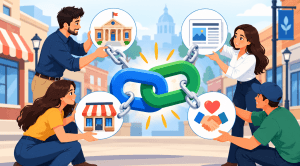
High-quality local backlinks come from legitimate websites that have a meaningful connection to your business, location, industry, or community. Instead of buying links or sending hundreds of generic outreach emails, focus on earning mentions through partnerships, useful local resources, reputable directories, community involvement, and genuine expertise.
That is the foundation of effective local link building strategies. The goal is not to collect as many backlinks as possible. It is to earn links that reinforce credibility, introduce your business to relevant audiences, and support a broader SEO strategy built around sustainable visibility.
Google confirms that links can contribute to local prominence, one of the primary factors it considers alongside relevance and distance when determining local results.
What Makes a Local Backlink Worth Pursuing?
A local backlink is worth pursuing when it comes from a legitimate website and makes sense for both businesses and users.
Start with relevance. A chamber of commerce, neighborhood publication, local university, respected nonprofit, supplier, industry organization, or complementary business can have a clear connection to your company. A random website created mainly to publish paid guest posts usually does not.
Then consider the audience. Does the website serve real people who could reasonably care about your business? Could someone discover your company through the link and become a customer, partner, employee, or referral source?
Context matters too. A natural mention inside an event page, useful article, member directory, resource guide, or partnership page is generally more meaningful than a link buried among hundreds of unrelated businesses.
A simple quality test is:
Relevance + Real Audience + Context + Trust + Referral Potential
Also pay attention to consistent local business information. When your company name, location details, contact information, and website are represented accurately across credible sources, the overall local presence becomes easier for both customers and search engines to understand.
How Do You Find Local Backlink Opportunities Before Doing Outreach?
Start locally, then narrow the list based on quality.
Search for organizations already connected to your market, such as chambers of commerce, professional associations, local newspapers, neighborhood publications, nonprofit groups, schools, community events, business alliances, suppliers, and complementary service providers.
Next, study competitors. Backlink research can reveal organizations, directories, publications, and resource pages that already link to businesses similar to yours. Ahrefs specifically recommends reviewing competitor links and locally relevant websites as ways to uncover potential opportunities.
Then evaluate every prospect using the quality criteria above. Skip sites that exist primarily to sell backlinks, publish unrelated content, or host hundreds of low-value business listings.
Good local link building strategies begin with better prospect selection. Ten carefully researched opportunities are usually more productive than a spreadsheet containing hundreds of websites with no meaningful relationship to your market.
Which Local Link Building Strategies Can Earn Links Naturally?
The most sustainable methods give another organization a genuine reason to mention your business.
Build Relationships With Complementary Local Businesses
Look for companies that serve the same customers without directly competing with you.
A wedding photographer might build relationships with venues and florists. A home remodeling company could connect with architects, interior designers, or specialized contractors. A B2B company may have opportunities with local vendors, technology providers, consultants, or business associations.
The purpose is not to create a forced “you link to me, I’ll link to you” arrangement. Build a useful business relationship first. Links can develop naturally through recommended-provider pages, educational collaborations, interviews, case studies, or joint resources.
Support Local Events and Community Organizations
Community involvement can create legitimate backlink opportunities while strengthening real-world visibility.
Consider industry events, nonprofits, school programs, local charities, professional associations, workshops, or community initiatives that genuinely fit your organization. If your business sponsors or participates in an event, the organizer may list participating companies on its website or include them in an event recap.
The business value should exist even without the backlink. That keeps the relationship authentic rather than turning sponsorship into a link-buying tactic.
Create Resources Local Websites Actually Need
Give local publishers something worth referencing.
Useful resources might include original local surveys, pricing guides, neighborhood resources, industry statistics, checklists, event calendars, research, or detailed explanations of issues affecting customers in your area.
A roofing company, for example, could publish a guide explaining how regional weather affects common roofing materials. A financial firm might create research about challenges facing local businesses.
Strong resources make outreach easier because you are offering something useful rather than simply asking someone to link to a sales page.
Contribute Expertise to Local Publications
Local journalists, business publications, podcasts, community blogs, and association websites regularly need credible expert perspectives.
Watch for opportunities to contribute commentary, answer questions, provide data, participate in interviews, or explain industry developments. Keep the pitch focused on what their audience gains.
Relevant local citation building can complement these efforts by strengthening your presence across trusted local platforms.
How Can You Ask for a Local Backlink Without Sounding Spammy?
Make the outreach specific enough that the recipient knows you actually looked at their website.
A practical process is:
- Research the person and website. Understand their audience, content, and connection to your business.
- Identify a real reason to contact them. It could be an event, resource, partnership, expert contribution, or missing information.
- Lead with value. Explain what you can provide and why their readers would care.
- Make one simple request. Avoid a long list of demands or exact-match anchor instructions.
- Make participation easy. Provide the correct page, description, images, statistics, or business details when relevant.
- Follow up sparingly. One thoughtful follow-up can be reasonable. Repeated messages quickly become spam.
Short and relevant wins.
For example, instead of asking a local publication to “add our backlink,” offer an original statistic, expert quote, community resource, or event their readers would genuinely find useful.
How Do Local Citations and Backlinks Work Together?
Citations and backlinks support local visibility in different ways.
A citation is an online reference to your business information, commonly including your name, address, and phone number. A backlink is a clickable link from another website to yours. Some directory listings provide both, while others may provide only a citation.
Reputable citations help customers and search engines find consistent information about a business. Backlinks create additional pathways to your website and can support its authority and prominence.
Google recommends maintaining complete and accurate Business Profile information and says local results primarily consider relevance, distance, and prominence. Its guidance also notes that prominence incorporates information such as websites linking to the business and reviews.
This is why Google Business Profile optimization and backlink acquisition should be treated as complementary parts of local SEO rather than isolated tactics.
How Do You Know Whether Your Local Backlinks Are Working?
Measure business impact, not just backlink count.
Google Search Console’s Links report shows top linking sites, top externally linked pages, and common linking text. Google notes that the report is a sample rather than a comprehensive inventory, so it works best alongside traffic, ranking, and conversion data.
Monitor changes in referring domains, referral traffic, organic visibility, local search impressions, leads, conversions, and the performance of pages earning links.
Also check whether valuable links remain live over time.
A successful campaign does not necessarily produce dozens of backlinks each month. One relevant link that consistently sends qualified visitors may deliver more business value than many links from sites nobody visits.
What Local Link Building Practices Should You Avoid?
Avoid tactics designed primarily to manipulate rankings rather than create genuine value.
Google’s spam policies specifically identify buying or selling links for ranking purposes, excessive link exchanges, automated link creation, low-quality directory links, optimized links in paid articles, and low-value content created primarily to manipulate linking signals as examples of link spam. Paid advertising and sponsorship links can be legitimate when appropriately qualified.
Be especially cautious with bulk backlink packages, private blog networks, automated comment links, irrelevant directories, paid guest-post networks, keyword-stuffed anchor text, and mass-produced outreach.
A useful final test: Would you still want this placement if it provided no direct SEO benefit?
If the link could generate referral traffic, build credibility, reach a relevant audience, or strengthen a legitimate relationship, there is probably a sound business reason for earning it.
FAQ
How many local backlinks does a small business need?
There is no universal number. The appropriate level depends on the competition, market, existing website authority, and quality of available links. Focus on earning relevant referring domains rather than chasing an arbitrary backlink total.
Are local directories good for backlinks?
Reputable directories can be useful when real customers use them or when they have clear relevance to your location or industry. Low-quality directories created mainly to distribute links should be avoided.
Do backlinks have to come from websites in the same city?
No. Geographic relevance can also come from regional organizations, industry associations, suppliers, publications, or pages that clearly relate to your service area. Topical and contextual relevance matter alongside physical location.
Can local backlinks help Google Maps rankings?
Backlinks can contribute to the broader prominence signals Google uses for local search, but they are not the only factor. Google also considers relevance and distance, while accurate business information and reviews contribute to local visibility.
How long does local link building take to show results?
There is no fixed timeline. Finding prospects, building relationships, publishing resources, earning coverage, and having search engines discover links all take time. Sustainable link building works best as an ongoing SEO activity rather than a one-time campaign.
Build Local Authority One Legitimate Connection at a Time
Strong local backlink profiles are usually built through useful content, credible relationships, local involvement, and consistent outreach, not shortcuts.
Start small. Identify five organizations, publications, partners, or resources genuinely connected to your market. Determine what you could contribute to each one, then approach them with value first.
That approach may generate fewer links than automated campaigns, but the links you earn are more likely to reach real people, strengthen your local presence, and remain valuable over time.
Why QBall Digital Is Your Ideal Choice for Local Link Building?
QBall Digital approaches local link building as part of a broader search strategy rather than treating backlinks as an isolated numbers game. Effective campaigns require research, relevant content, competitive analysis, authority building, and ongoing measurement. That combination helps businesses pursue opportunities that support visibility and meaningful business outcomes.
QBall Digital also understands that local SEO extends beyond backlinks alone. Citations, business information, local content, reputation, search visibility, and credible mentions all contribute to a stronger digital presence. By connecting these elements, businesses can build authority without depending on spammy shortcuts or disposable links.
Strengthen Your Local Search Presence With QBall Digital
If you want to identify better backlink opportunities, strengthen your local SEO foundation, and turn organic visibility into measurable growth, contact QBall Digital. Build a strategy focused on credibility, relevance, and sustainable results rather than chasing links for the sake of a higher count.