
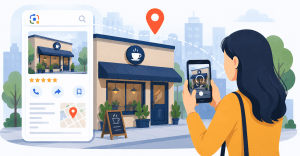
Visual search is changing local discovery by letting customers search with what they see instead of relying only on typed keywords. A photo of a product, storefront, sign, menu item, piece of equipment, or completed project can become the starting point for a search through tools such as Google Lens and AI-powered Search experiences. For local businesses, image SEO 2026 means treating important photos as searchable content that helps search engines understand what the business offers and helps customers decide whether it matches their needs.
That shift matters because Google continues to expand multimodal search. In 2026, Google says its visual search systems can analyze multiple objects and broader context within an image, then use that information to explore related results. For local businesses, being understandable visually is becoming another part of being discoverable online.
What Does Image SEO 2026 Require From Local Businesses?
Image SEO 2026 requires more than adding keywords to an image file. Google can use the image itself along with the page where it appears, nearby text, captions, filenames, alt text, metadata, technical accessibility, and other signals to understand the image and determine where it may be useful.
Google specifically recommends descriptive filenames and useful alt text while placing images near relevant copy on pages that match the image subject. It also stresses image quality, responsive delivery, crawlability, and website performance. Keyword stuffing, on the other hand, does not make an image more useful.
For local companies, the practical goal is straightforward: show real products, services, locations, people, and results in a way that both customers and search systems can understand. That fits naturally into a broader search engine optimization strategy rather than functioning as a separate SEO tactic.
Where Can Optimized Images Help Customers Discover a Local Business?
Optimized images can support discovery across several Google experiences.
Google Images can surface photos connected to relevant web pages. When a user clicks an image result, Google can direct that person to the page hosting it. Google Lens goes further by allowing users to take or upload a photo and search for information, similar images, objects in the image, and websites containing the same or related imagery.
Images can also appear in standard Google results and other search experiences. Google has continued integrating Lens with AI-powered search, making it possible to understand scenes, objects, colors, materials, and relationships within an image.
Then there is local search. Business Profile photos can help customers inspect a storefront, products, services, atmosphere, and other details before they call or visit. Photos should complement a complete Google Business Profile strategy, not replace one.
Google states that local rankings are mainly determined by relevance, distance, and prominence. There is no documented shortcut where simply uploading optimized photos guarantees better Maps rankings.
Which Images Are Most Valuable for Local Visual Search?
The most useful local images are usually the ones that show what a customer can actually expect.
For a restaurant, that may include signature dishes, the dining area, exterior signage, and the entrance. A contractor could publish completed projects, work in progress, equipment, and before-and-after photos. A dentist might show the office, treatment rooms, staff, and relevant technology. Retail stores can focus on products, displays, inventory, and the physical location.
Original photos are especially valuable because they provide genuine information about a specific company. Generic stock photography may make a page look polished, but the same image can appear on hundreds of unrelated sites. A real storefront or completed project provides much stronger context.
Service businesses should not assume visual discovery is only for ecommerce. Images can demonstrate experience, clarify services, establish expectations, and help customers recognize a business in the physical world.
How Should Local Businesses Optimize Images for Visual Search?
Start with images that matter to the customer journey. Product pages, service pages, location pages, case studies, and high-converting landing pages deserve attention before decorative website graphics.
Use clear, original images where the primary subject is easy to recognize. Give each important file a short descriptive filename rather than something like IMG_4837.jpg. Write alt text that describes the image naturally and supports accessibility without repeating keywords unnecessarily.
Context matters too. Google says it extracts information about an image from the page, including captions and nearby text. Place important photos next to relevant information instead of inserting them randomly into unrelated sections.
Technical performance also counts. Use responsive images and efficient formats such as WebP or AVIF where appropriate, while preserving enough quality for customers to clearly inspect the subject. Google supports both formats in Search and recommends balancing image quality with page speed. A mobile-friendly website and strong user experience make those optimizations more valuable.
Finally, make sure important images are crawlable. Google recommends standard HTML image elements and says image sitemaps can help it discover images it might otherwise miss. Page-appropriate structured data can also give search engines additional context about content such as products, articles, and business information.
How Should Google Business Profile Photos Support Visual Discovery?
Google Business Profile photos should accurately show customers what the business looks like and what it provides.
Google recommends business-specific photos such as exterior, interior, product, service, team, and work-related images depending on the business category. Its current guidance recommends clear, well-lit photos that represent reality without excessive filters or significant alterations.
Keep those visuals consistent with the website. If a company renovates its storefront, changes branding, adds a new service, or significantly updates its facilities, both the website and profile should reflect that reality.
Consistency also extends beyond images. Business names, addresses, phone numbers, categories, hours, and other information should remain accurate across the local ecosystem. QBall Digital’s guide to local citation building provides a useful framework for addressing inconsistent business information.
What Image SEO Mistakes Can Hurt Local Discovery?
The biggest mistakes usually come from optimizing for an algorithm while forgetting the customer.
Uploading enormous image files can slow important pages. Generic filenames provide little context. Keyword-stuffed alt text creates a poor accessibility experience. Blurry storefront photos or outdated service images can also reduce confidence even if they technically appear in search.
Another mistake is putting essential information only inside an image. Searchable page copy should still explain the service, product, location, or offer. Likewise, important images should not be hidden behind implementations that make them difficult for search engines to discover.
And avoid chasing unsupported hacks. Claims that GPS metadata, endless photo uploads, or keyword-heavy filenames automatically improve local rankings oversimplify how local search works.
How Can a Local Business Measure Whether Image SEO Is Working?
Measurement should connect visual visibility with actual customer behavior.
Google Search Console allows site owners to filter Search performance by Image search type and review impressions, clicks, queries, and landing pages. That makes it possible to identify pages receiving traffic from Google Images and compare performance over time.
But image impressions are not the final goal. Look at what happens next: organic visits, engagement with key pages, form submissions, calls, appointment requests, purchases, and other conversions.
A practical image SEO 2026 audit should therefore connect Search Console findings with broader website and lead-generation data. That approach fits a complete digital marketing strategy where visibility is measured by whether it produces meaningful business opportunities.
What Should Local Businesses Prioritize First?
Local businesses should start with the visual assets closest to revenue.
Review the main images on high-value service, product, and location pages. Replace outdated or generic photography where possible. Improve filenames and alt text, strengthen surrounding page content, reduce unnecessarily large files, confirm that important images are crawlable, and check whether relevant structured data is implemented correctly.
Then align those website images with your Business Profile, local listings, and broader search presence. Google can source Business Profile information from official websites, public web content, users, business owners, and other sources, so maintaining an accurate digital presence matters beyond a single channel.
Visual search does not eliminate traditional SEO. It adds another path into it. Businesses that make their services easier to understand through words, images, local information, and strong website experiences give customers more ways to find them and more reasons to choose them.
FAQ
Does alt text help with local SEO?
Alt text helps search engines understand image content and supports accessibility, but it should not be treated as a standalone local ranking tactic. Google recommends writing useful descriptions rather than stuffing keywords into alt attributes.
Can Google Lens help customers find local service businesses?
Yes, potentially. Lens can analyze an image or object and return information, similar images, relevant websites, and other search results. That creates opportunities beyond traditional product search when a visual query relates to a service, place, object, or problem a local company addresses.
Do geotagged photos improve Google Business Profile rankings?
Google does not list embedded GPS or EXIF geotags as one of its primary local ranking factors. Its official guidance identifies relevance, distance, and prominence as the main factors. Focus first on accurate business information, useful photos, reviews, website relevance, and a sound local SEO foundation.
Should local businesses use WebP or AVIF images?
Both are supported by Google Search and can be useful for efficient image delivery. The best choice depends on your website setup, browser support, image quality needs, and compression workflow. Responsive delivery and good performance matter more than adopting a format simply because it is newer.
How often should a local business update its photos?
Update images when they no longer represent the customer experience accurately. Changes to products, services, employees, facilities, branding, equipment, or storefront appearance are good reasons to refresh visual content. Useful and accurate beats uploading on an arbitrary schedule.
Why QBall Digital Is Your Ideal Choice for Image SEO and Local Search?
QBall Digital approaches visual optimization as one part of a much larger discovery strategy. Its SEO services for small businesses connect content, on-page optimization, technical performance, local SEO, website experience, and measurement rather than treating each tactic as an isolated checkbox. That matters as search becomes increasingly visual, local, and AI-assisted.
QBall Digital also works with small businesses that need marketing activity tied to practical outcomes such as better visibility, stronger websites, calls, leads, and new customers. With experience spanning SEO, paid search, web development, reputation management, and local marketing, the team can identify where visual assets fit into the complete customer journey. A coordinated approach makes it easier to improve discoverability without losing sight of conversion.
Make Your Business Easier to Find With QBall Digital
Customers can now search with words, images, cameras, Maps, and AI-assisted experiences. Your business should be understandable across all of them.
QBall Digital can review your website, visual content, local presence, and search strategy to uncover opportunities that make your business easier to discover and easier to choose. Start with a focused review, identify the highest-impact improvements, and turn stronger visibility into measurable customer action.