
When people in Indianapolis need a service, they usually do not begin with a long research process. They search, compare a few businesses, and contact the one that looks most relevant, most credible, and easiest to reach. That is why Local SEO and Google Ads work so well together. One helps your business earn visibility in local organic and map-based results, while the other helps you appear immediately for high-intent searches that are ready to turn into calls. Google states that Business Profiles help eligible businesses appear on Search and Maps, and that local ranking is shaped primarily by relevance, distance, and prominence. Google also offers ad formats specifically designed to encourage phone calls.
This page is not a general overview of digital marketing. It is a practical explanation of how Indianapolis businesses can use Local SEO and Google Ads together to increase visibility across the search results page, earn more trust at the moment of decision, and turn local demand into measurable phone calls. That narrower focus keeps this article separate from broader discussions about digital marketing strategy, affordability, AI, or industry-specific campaign planning.
What do Local SEO and Google Ads each do for Indianapolis businesses?
Local SEO helps your business become easier to find in unpaid local search results, especially in Google Search and Google Maps. A strong local presence starts with an accurate and verified Google Business Profile, complete business information, the right business category, current contact details, and signals that support prominence such as reviews and strong web visibility. Google explains that complete and accurate business information improves the likelihood of appearing in local results, and that prominence can be influenced by reviews, links, articles, directories, and your overall web presence.
Google Ads serves a different role. It allows your business to appear immediately in paid placements for searches that matter now, including searches from people ready to call. Google’s call ads are built to encourage users to call directly from the ad, and call campaigns are specifically designed to generate phone calls while allowing ads to run when your business is available to answer.
For Indianapolis businesses, that means Local SEO builds a lasting presence while Google Ads helps capture active demand without waiting for rankings to improve. One is compounding visibility. The other is immediate access to local intent. Together, they cover more of the buying journey.
Why is relying on only SEO or only ads a mistake for local lead generation?
Relying only on Local SEO can slow growth because rankings, map visibility, and prominence signals usually take time to strengthen. Even if your business is doing the right things, you may still need months of consistent work before local visibility becomes dependable. Google’s own local guidance makes clear that ranking depends on multiple factors rather than any single setting or quick fix.
Relying only on ads creates a different problem. Paid traffic can produce leads quickly, but the visibility disappears when spending stops. That makes ads powerful, but rented rather than owned. A business that depends only on paid placements may keep paying for every opportunity without building the long-term trust and discoverability that a strong local presence creates.
The better model is to use Local SEO and Google Ads together. SEO strengthens your local footprint in Search and Maps. Ads give you speed, targeting, and call-focused visibility while your organic presence grows. Instead of asking which channel is better, the more useful question is how much of the search results page your business can control when a nearby customer is ready to act.
How do Local SEO and Google Ads work together on the same search results page?
They work together by helping your business appear in multiple places at once. A local searcher may see a paid ad, a map pack result, and organic listings during the same search session. Even when the user does not consciously think about it, repeated visibility creates familiarity and credibility. If your business appears in more than one place, it looks established and easier to trust.
Google Business Profile supports visibility on Search and Maps for eligible businesses, while Google Ads location assets can display location information such as address, map directions, or travel distance in ads. That creates a stronger local presence because your paid campaigns can reinforce the same business identity users see in Maps and local results. Google also allows businesses to link Business Profile location data with Ads through location assets.
For an Indianapolis company, this matters because local competition is often decided by convenience and confidence. The business that looks nearby, established, and easy to contact usually has an advantage over the business that appears only once and gives the searcher fewer reasons to engage.
What local searches in Indianapolis are most likely to turn into phone calls?
The searches most likely to generate calls are usually the ones with immediate intent. These are searches where the customer is not browsing a topic but trying to solve a problem, hire a provider, or confirm who can help today. In practice, that often means service-based searches, location-specific queries, urgent need phrases, and searches that imply readiness to contact a business.
Google’s call-focused ad formats exist because some searches naturally lead to direct calls rather than long website sessions. Call ads are designed specifically to encourage phone calls, and call campaigns let businesses show ads during the hours when someone can answer. That aligns especially well with searches where customers want answers fast and would rather talk to a person than read multiple pages.
For Indianapolis businesses, the goal is not just to target broad terms that generate traffic. It is to prioritize the searches that signal urgency, service intent, and local relevance. That is where Local SEO and ads begin working like a call-generation system rather than a visibility exercise.
How does Google Business Profile support call generation from Local SEO?
Google Business Profile is one of the most practical local SEO tools because it places your business information directly where searchers are deciding whom to contact. Google says a Business Profile lets you maintain visible details such as your phone number, website, business hours, and location on Search and Maps. It also allows businesses to interact with customers, collect and respond to reviews, and improve how they appear online so new customers can find them.
That matters for calls because people who search locally are often looking for the fastest path to action. If your profile is verified, complete, accurate, and clearly aligned with what the customer needs, it reduces friction. Google also notes that after you add or claim and verify your profile, customers can find your business on Search and Maps, and you can control how information appears.
Just as important, Google’s local ranking framework shows why profile quality matters. Relevance, distance, and prominence shape local results. Prominence is influenced by signals such as reviews, links, articles, and directories, and Google notes that positive review quantity and quality can improve local ranking. That means a Business Profile is not only a directory listing. It is part of the visibility system that helps determine whether people find you before they find competitors.
What types of Google Ads are best for businesses that want more calls?
The best ad formats for call-driven local lead generation are usually search ads enhanced with call features, dedicated call ads or call campaigns, and location-enabled ads that reinforce local presence. Google explains that call ads are designed to encourage people to call your business and appear only on devices that make phone calls. When a user taps the call button, the ad initiates a call from that device.
Call campaigns are also built for businesses that want calls as the primary outcome. Google says they are designed to encourage customers to call by clicking or tapping the ad, and businesses can set ads to show only when they can take calls. For many Indianapolis service businesses, that is important because missed calls often mean missed revenue.
Location assets strengthen standard search ads by adding local business information. Google says location assets can show an address, a map, or approximate travel distance and can help people find your locations. When paired with a verified Business Profile, they make your ads feel more grounded and local rather than generic.
The practical takeaway is simple: if calls are the goal, your campaigns should not be built only for clicks. They should be built for direct contact.
How do landing pages affect whether local search traffic turns into calls?
A landing page affects whether the momentum from a local search actually turns into action. When someone clicks from a paid ad or visits from a local search result, they should land on a page that immediately confirms they are in the right place, serves the right area, offers the right service, and makes calling easy.
This is especially important for call-focused campaigns because the searcher is often close to making a decision. A cluttered page, vague messaging, or too many options can interrupt that decision. By contrast, a focused landing page supports the message already presented in the ad or listing and reduces hesitation.
Google’s call conversion documentation also shows why the landing-page experience matters for measurement. Google can track calls to a phone number on your website when proper setup is in place, and reporting can tie those calls back to keywords, ads, ad groups, and campaigns. That means the page is not just where conversion happens. It is also where useful attribution begins.
What is the best way to measure whether Local SEO and Google Ads are actually driving qualified calls?
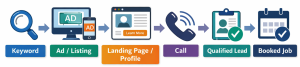
The best way is to track calls in a way that connects them to the search activity that created them. Google Ads supports phone call conversion tracking, including calls from ads and calls to a phone number on your website. Google explains that businesses can measure which keywords, ads, ad groups, and campaigns lead to website call conversions, and that call reporting can provide details such as call duration, start time, whether the call connected, and in some cases caller information for longer calls.
That level of visibility matters because not every call has the same value. A campaign that generates many short, low-quality calls may be less useful than one that produces fewer but better conversations. Google also allows businesses to define call conversion thresholds, such as minimum call length, which helps align reporting more closely with meaningful inquiries.
For Indianapolis businesses, the right question is not “How many clicks did we get?” It is “Which search terms, ad formats, and local touchpoints produced the calls most likely to become revenue?” When Local SEO and Ads are measured that way, decision-making gets much clearer.
Are Local SEO and Google Ads a good fit for every Indianapolis business?
They are a strong fit for many local businesses, but not automatically for every business model. Google Business Profile is intended for businesses that interact with customers face-to-face during business hours, including storefronts and service-area businesses. Google notes that Business Profiles are not for online-only businesses or properties for rent or sale.
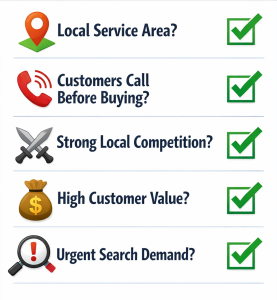
Google Ads can work across many business types, but call-driven campaign structures are most valuable when a real phone conversation helps move the sale forward. If a business rarely closes leads by phone, or if the service is not strongly tied to local search behavior, the return from a call-first approach may be weaker.
For many Indianapolis businesses, though, this combined model makes sense. If your customers search locally, compare nearby options, and often prefer to call before buying, Local SEO and Google Ads fit naturally. They are especially useful when speed, trust, and ease of contact influence who gets chosen.
What should businesses look for in an Indianapolis agency that manages both Local SEO and Google Ads?
The first thing to look for is integration. Local SEO and Google Ads should not be handled as separate silos if the actual goal is to dominate more of the search page and generate more calls. A strong agency should understand how your Business Profile, landing pages, call setup, and search campaigns support one another.
The second thing is measurement discipline. Google provides detailed call reporting, conversion tracking options, and local visibility tools, but they only help if someone configures them correctly and uses the data to improve performance. An agency should be able to explain how it tracks calls, how it distinguishes weak leads from strong ones, and how it adjusts campaigns based on actual outcomes.
The third thing is local relevance. Indianapolis is not just a keyword modifier. It is the market context for the search behavior you want to capture. An agency should understand how to align service-area targeting, profile optimization, ad messaging, and local landing-page structure so the business appears credible and convenient to nearby searchers at the moment they are deciding whom to contact.
FAQ
How long does Local SEO take to increase calls?
Local SEO usually takes longer than paid ads because it depends on building stronger visibility in local results over time. Google’s local ranking framework is based on relevance, distance, and prominence, so results improve as your profile quality, website signals, and local trust indicators improve.
Can Google Ads generate calls right away?
Yes. Google’s call ads and call campaigns are specifically designed to encourage users to call your business, so they can begin generating phone inquiries as soon as campaigns are active and eligible to serve.
Do I need both a website and a Google Business Profile?
A Google Business Profile can help businesses appear on Search and Maps even if they do not have a full website, but businesses with a website generally have more control over messaging, landing pages, and conversion tracking. Google notes that a Business Profile can maintain visible business information and direct customers to your website and other destinations.
What is the difference between map visibility and paid search visibility?
Map visibility comes from your local presence in Google Business Profile and local ranking factors. Paid search visibility comes from Google Ads placements that you buy through auction-based campaigns. They can support each other, but they are earned and managed differently.
How can I tell which calls came from SEO versus ads?
Google Ads supports call reporting and phone call conversion tracking for ads and for certain website calls after ad clicks. That helps separate paid-call activity from broader organic activity. For a full picture, businesses typically need clean reporting and consistent call attribution setup.
Is Local SEO still worth it if I already run Google Ads?
Yes. Ads can produce immediate visibility, but Local SEO supports long-term discoverability in Search and Maps. Combining both helps your business appear in more places when nearby customers are actively searching.
Conclusion
Indianapolis businesses do not have to choose between Local SEO and Google Ads when the smarter path is to use both with a clear call-generation goal. Local SEO helps your business become visible and credible in Search and Maps. Google Ads gives you speed, control, and immediate access to high-intent searches. Together, they help you claim more of the search results page, reduce the chance that a ready-to-buy customer chooses a competitor, and create a clearer path from search to phone call.
When the strategy is set up correctly, the result is more than better visibility. It is a more practical local growth system: show up where people search, make contacting your business easy, and measure what actually drives qualified calls.
Why QBall Digital is Your Ideal Choice for Local SEO and Google Ads in Indianapolis?
QBall Digital is built for businesses that need more than surface-level marketing activity. A company can have a decent website, run ads, and still miss the deeper problem: not showing up strongly enough in local search when nearby prospects are ready to call. That is where a combined Local SEO and Google Ads strategy becomes valuable. Instead of treating maps, organic visibility, paid search, and conversion tracking as separate tasks, QBall Digital can approach them as parts of one local acquisition system.
That matters in Indianapolis because local competition is won in small moments. A prospect searches, sees a few options, and makes a decision quickly. QBall Digital can help businesses improve how they appear in those moments, strengthen their visibility across multiple search placements, and connect campaign activity to real call outcomes. The value is not just running tactics. It is building a local search presence that is easier to find, easier to trust, and easier to contact.
Get More Calls in Indianapolis With QBall Digital
If your business needs better visibility in local search and a clearer path from search click to phone call, QBall Digital can help you build a smarter strategy. With Local SEO, Google Ads, and call-focused optimization working together, your marketing can do more than generate traffic. It can generate conversations with people who are already looking for a business like yours.
Talk with QBall Digital about a strategy that helps your business show up more often, compete more effectively in Indianapolis search results, and turn more local intent into qualified calls.