AI in digital marketing is helping small businesses most when it improves everyday execution, not when it promises a complete marketing revolution. In practice, that means faster content workflows, smarter ad bidding, better lead prioritization, more responsive customer support, and cleaner reporting. The real opportunity is not replacing marketers. It is giving lean teams better leverage.
For small businesses, that distinction matters. Many companies are already using AI through tools inside Google Ads, email platforms, CRMs, chat systems, and analytics dashboards, even if they do not think of those features as “AI.” The practical question is not whether AI exists in marketing anymore. It is where it can create measurable gains without weakening quality, trust, or brand voice.
What Is AI in Digital Marketing?
AI in digital marketing is the use of machine learning and generative systems to improve how marketing teams analyze data, make decisions, personalize experiences, create drafts, and optimize campaigns. In plain terms, it helps software identify patterns faster than a person can, and in some cases generate content or recommendations that a marketer can refine.
It also helps to separate three ideas that often get mixed together. Automation follows preset rules, such as sending a welcome email after a form fill. Predictive AI looks at data and makes recommendations or optimizations, such as bid adjustments or lead scoring. Generative AI creates new outputs such as draft copy, outlines, summaries, or chatbot responses. Small businesses get the best results when they know which type they are using and what role human review still plays.
Why Are Small Businesses Paying Attention to AI in Digital Marketing Now?
Small businesses are paying attention now because the pressure to do more with smaller teams keeps increasing. Marketers are being asked to create more content, respond faster to leads, personalize outreach, prove ROI, and manage more channels at once. AI matters because many common marketing platforms now include built-in features that reduce manual work and improve decision-making.
There is also growing mainstream adoption. HubSpot reports that 66% of marketers globally are using AI in their roles, based on a survey of more than 1,000 marketing and advertising professionals. Salesforce’s ninth State of Marketing report also centers AI, data, and personalization as major priorities, drawing on insights from nearly 5,000 marketers worldwide. That does not mean every business is using AI well, but it does mean the technology is now part of normal marketing operations rather than a fringe experiment.
How Does AI in Digital Marketing Help Small Businesses Save Time?
AI saves time best when it removes repetitive first-pass work. A small team can use it to draft ad variations, summarize campaign performance, suggest send times for emails, prioritize leads, organize support responses, and produce rough content structures that humans later improve. That kind of time recovery is more useful than chasing fully automated marketing.
That time benefit is not just theoretical. HubSpot’s AI report says marketers are saving an average of one to two hours in their workday with AI-enabled workflows. For a small business owner or a lean in-house team, one to two hours per day can mean faster follow-up, more testing, and better consistency across campaigns.
What Are the Most Practical Uses of AI in Digital Marketing for Small Businesses?
| Use case | Primary channel/tool | Time saved | Human oversight needed | Likely ROI impact |
|---|---|---|---|---|
| Content support | Website, blog, SEO tools, CMS | Medium to high | High | Medium to high |
| Paid media optimization | Google Ads / paid media platforms | High | Medium | High |
| Lead prioritization | CRM / sales pipeline | Medium | Medium | High |
| Customer response automation | Chatbot, website chat, CRM | High | Medium | High |
A Table of Practical AI Use Cases for Marketing and Sales Teams
The most practical uses are usually the least glamorous. One is content support: brainstorming topics, outlining blogs, refreshing older pages, and drafting metadata. Another is paid media optimization, where Google AI helps adjust bids in real time based on conversion goals and available signals. A third is lead prioritization, where CRM tools analyze engagement and fit to surface the prospects most likely to convert.
A fourth is customer response automation. Chatbots and AI-powered customer agents can qualify leads, answer common questions, book meetings, and route people to the right next step. HubSpot’s chatbot tools and AI customer agent are designed for exactly that kind of frontline support, freeing staff to handle more complex conversations. For small businesses, that can tighten response time without forcing every interaction through a human bottleneck.
How Can Small Businesses Use AI in Content Marketing Without Sacrificing Quality?
Small businesses can use AI in content marketing safely when they treat it as a research and drafting assistant, not a replacement for expertise. Good uses include outline generation, FAQ ideation, content repurposing, summary drafts, headline testing, and content refresh planning. Google’s Search guidance explicitly says generative AI can be useful for researching a topic and adding structure to original content.
What businesses should not do is mass-produce pages with no original value. Google warns that generating many pages without adding value for users may violate its spam policy on scaled content abuse. That is the line small businesses need to respect. AI can speed up the writing process, but the finished page still needs human judgment, fact-checking, clear positioning, and useful original insight.
This is especially important for trust-building content. A small business does not win by publishing the fastest average article. It wins by publishing content that sounds credible, answers the reader’s actual question, and reflects real experience. AI can help with the first draft, but authority still comes from human editing and strategic clarity.
How Is AI in Digital Marketing Changing Paid Advertising for Small Businesses?
AI is already built deeply into modern PPC. Google’s Smart Bidding uses Google AI to optimize for conversions or conversion value, and it sets bids for each auction based on available signals. Google also says Smart Bidding tailors bids using billions of combinations of signals in real time. That matters because a small business usually cannot manually evaluate every contextual factor affecting each auction.
Performance Max extends that AI-driven approach further. Google says Performance Max uses AI across bidding, budget optimization, audiences, creatives, attribution, and more, guided by your business goals, creative assets, and audience signals. In other words, the platform can do more of the cross-channel optimization work, but only if the advertiser supplies clear goals and strong inputs.
That is the practical takeaway for small businesses: AI in paid advertising is most useful when tracking is reliable. Google states that enhanced conversions can improve conversion measurement accuracy and unlock more powerful bidding by using hashed first-party data in a privacy-safe way. If a business has weak conversion tracking, even the best AI bidding system will optimize against incomplete signals.
Can AI Improve Customer Experience and Lead Conversion?
Yes, AI can improve customer experience and lead conversion when it removes friction. Chatbots can answer simple questions immediately, qualify leads before a sales conversation, book meetings, and trigger follow-up workflows. That is especially valuable for small businesses that cannot staff live responses around the clock.
AI can also improve follow-up prioritization. HubSpot’s lead scoring tools use AI-assisted engagement scoring and analyze past interactions from successful leads that converted to recommend more precise scores. That means a small team can focus first on leads showing the strongest fit and intent instead of treating every inquiry the same.
Personalization can also become more practical. HubSpot’s email tools can suggest send times based on recipient behavior, and certain accounts can deliver each email at an individual contact’s best time based on recent opens and clicks. For a small business, that is a manageable example of AI improving relevance without requiring a complex enterprise personalization program.
What Are the Biggest Risks of Using AI in Digital Marketing?
The biggest risks are inaccurate outputs, bland messaging, privacy mistakes, over-automation, and using AI to scale low-value content. On the content side, the risk is publishing something that sounds polished but is weak, repetitive, or wrong. On the campaign side, the risk is trusting automated systems without enough oversight, goals, or measurement discipline.
There are also real consumer-protection concerns. The FTC says it is increasingly taking note of AI’s potential for real-world harm, including enabling fraud and impersonation, and it stresses that there is no AI exemption from existing laws. For marketers, that means AI use still has to respect truthfulness, privacy, and fair treatment. Faster execution does not remove legal or ethical responsibility.
How Can Small Businesses Start Using AI in Digital Marketing the Right Way?
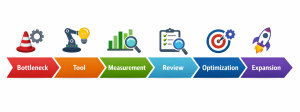
The smartest way to start is with one bottleneck, not a full overhaul. Pick a task that already consumes time or slows revenue, such as slow lead follow-up, inconsistent content production, or inefficient PPC optimization. Then choose one AI-assisted workflow inside a platform you already use. That keeps the experiment focused and makes it easier to measure impact.
Next, make sure your measurement foundation is solid. In Google Ads, clear conversion values and accurate conversion tracking give AI better signals for optimization. Google’s own guidance emphasizes assigning values to conversions so campaigns can optimize toward real business impact, not just raw volume.
Finally, create simple review rules. Decide what AI can draft, what must be approved by a person, what data can be used, and what success will look like after 30 or 60 days. Small businesses tend to get the best results when they expand AI usage only after one use case proves itself in live conditions.
Which Tasks Should Businesses Keep Human-Led?
Businesses should keep strategy, positioning, offer development, brand voice decisions, sensitive customer communication, and final approvals human-led. AI is helpful at accelerating options and surfacing patterns, but it does not understand nuance, market context, or customer trust the way experienced marketers do.
That is why the most effective setup is usually hybrid. Let AI handle speed, pattern recognition, and first drafts. Let people handle judgment, prioritization, differentiation, and accountability. For a small business, that combination is much more realistic and profitable than trying to automate everything.
Is AI in Digital Marketing Worth It for Every Small Business?
Not equally. AI is most worth it for small businesses that already have basic marketing foundations in place: a working website, functioning conversion tracking, regular lead flow, and enough activity to benefit from time savings or optimization. In those cases, AI can create meaningful leverage.
It is less valuable when the fundamentals are still broken. If a business has unclear positioning, no reliable tracking, weak offers, or inconsistent follow-up, AI will not solve the real problem. It may speed up output, but it will not automatically create strategy or demand.
What Does the Future of AI in Digital Marketing Look Like for Small Businesses?
The future looks less like a dramatic takeover and more like deeper AI inside everyday tools. More ad platforms will optimize automatically, more CRMs will score and route leads intelligently, more email tools will personalize timing and messaging, and more support systems will handle simple questions before a human steps in.
That also means differentiation will matter more. As AI makes basic execution easier, small businesses will need stronger positioning, better offers, cleaner data, and a clearer brand voice to stand out. The advantage will not come from merely “using AI.” It will come from using it with discipline and purpose.
Conclusion
AI in digital marketing is useful for small businesses when it helps them do the fundamentals better: respond faster, prioritize smarter, optimize campaigns more efficiently, and create better workflows with less wasted time. The real value is practical, not flashy.
Used well, AI supports growth without replacing strategy. Used poorly, it creates noise, weakens quality, and hides deeper marketing problems. The businesses that benefit most will be the ones that combine AI-enabled tools with strong human oversight, clear goals, and a commitment to useful marketing.
Why QBall Digital is Your Ideal Choice for AI in Digital Marketing?
QBall Digital is an ideal choice for businesses that want practical AI adoption instead of trend-driven experimentation. The real challenge is not finding AI tools. It is applying them in ways that improve lead quality, campaign performance, and marketing efficiency without sacrificing clarity or trust. That takes strategy, oversight, and a strong understanding of how paid media, content, conversion tracking, and customer experience work together.
QBall Digital can help bridge that gap by focusing on the use cases that actually move results. Whether the opportunity is smarter PPC optimization, better reporting, more effective lead handling, or content workflows that save time without lowering quality, the goal should always be measurable business impact. AI works best when it supports a solid marketing system, and that is where an experienced digital marketing partner adds real value.
Ready to Grow Smarter with QBall Digital?
If your business wants to use AI in digital marketing without wasting time on hype, QBall Digital can help you focus on what works. From smarter campaign management to more efficient lead generation and stronger marketing processes, the right approach can turn AI from a buzzword into a practical growth tool.
Is AI in digital marketing only useful for large companies?
No. Many of the most practical AI features are already built into tools that small businesses use, including Google Ads, CRMs, email platforms, and chat tools. The difference is that small businesses should focus on a few high-impact workflows instead of trying to deploy AI everywhere at once.
Can AI help with Google Ads and paid social campaigns?
Yes. In Google Ads, AI is already used in Smart Bidding, Performance Max, and measurement features such as enhanced conversions. Those systems can improve optimization, but they perform best when campaign goals and tracking are set up properly.
Will AI replace human marketers?
No. AI can automate parts of execution and support analysis, but strategy, brand judgment, positioning, and final decision-making still need people. The most effective model is human-led marketing with AI assistance.
How can small businesses use AI without sounding robotic?
Use AI for brainstorming, drafts, summaries, and structure, then have a human rewrite, verify, and align the output to the company’s real voice and expertise. Google’s guidance supports AI use that adds value for users, not scaled content with no meaningful originality.
What is the difference between AI and marketing automation?
Marketing automation follows rules you set. AI can go further by identifying patterns, making predictions, recommending actions, or generating content. In practice, most businesses use a mix of both.
What should a business measure before and after using AI tools?
Track time saved, lead response time, conversion rate, cost per lead, return on ad spend, and close rate from qualified leads. For paid campaigns, accurate conversion values and improved measurement are especially important because they affect how AI bidding systems optimize.