
Digital marketing in Indianapolis looks very different for high-intent service businesses than it does for brands selling low-cost products or trying to build broad awareness. A company in roofing, dental care, med spa services, legal work, restoration, home services, or specialized B2B support is usually not trying to entertain casual browsers. It is trying to capture demand from people who already have a need, are comparing options, and may be ready to call, book, or request a quote. Google’s own lead-generation guidance supports that mindset by emphasizing how businesses can reach people at pivotal moments and optimize around stronger lead-quality signals rather than surface-level activity.
That difference matters because high-intent services are usually purchased with more urgency, more financial weight, or more trust sensitivity than ordinary consumer purchases. Someone searching for an Indianapolis divorce lawyer, emergency plumber, cosmetic treatment provider, or commercial marketing partner is often evaluating credibility fast. They want to know whether the business serves their area, understands their problem, looks trustworthy, and gives them a clear next step. Google Business Profile guidance reinforces this local decision pattern by explaining that local results depend on relevance, distance, and prominence, and that complete, accurate business information helps companies show up in the right local searches.
For that reason, digital marketing in Indianapolis should not be treated like a generic menu of services. It should be built around the type of service being sold, the urgency of the buyer, the level of trust required, and the value of each lead. That is especially true for high-intent industries, where one qualified lead can be worth far more than dozens of low-quality clicks. Google Ads’ qualified-lead framework exists for exactly this reason: meaningful optimization requires a better definition of success than just raw submissions.
What makes a service business “high-intent” in digital marketing?
A high-intent service business is one where buyers usually search because they want a solution soon, not because they are casually exploring. These are the searches that often include strong service language, local intent, urgency, or decision-stage behavior. The person may not buy instantly, but they are much closer to action than someone consuming broad awareness content. Google’s lead-generation documentation reflects this by focusing on moments of active need and on capturing better signals from leads that move deeper into the funnel.
High-intent services usually share a few traits. The lead is valuable. The buyer often has a clear problem. Trust matters early. And the window to influence the decision may be short. A homeowner with water damage, a patient looking for a cosmetic dentistry provider, or a business owner looking for a marketing agency is often choosing from a short list, not browsing endlessly. That is why channels like local SEO, Google Ads, Business Profile optimization, and high-converting service pages matter so much more in these markets. Google’s local ranking guidance directly supports the importance of local relevance and business prominence in that type of search behavior.
This is also why not every Indianapolis business needs the same strategy. A med spa, a law office, and an HVAC company may all rely on local demand, but the triggers behind those searches are different. One buyer is urgency-driven. Another is trust-driven. Another may be comparing expertise, before-and-after proof, financing, or insurance acceptance. The marketing system has to match the decision pattern, not just the keyword. That distinction is what separates a high-performing local lead-gen strategy from a generic digital marketing package.
Which Indianapolis industries benefit most from high-intent digital marketing?
The Indianapolis industries that tend to benefit most from high-intent digital marketing are the ones where customers actively search for a provider, compare a small set of options, and then convert through calls, forms, consultations, or booked appointments. That usually includes legal services, dental and medical practices, med spas, roofing and exterior contractors, HVAC and plumbing companies, restoration services, and specialized B2B firms. These industries all depend on being discoverable at the moment a need becomes urgent or commercially serious. Google’s local and lead-generation guidance strongly supports this demand-capture model.
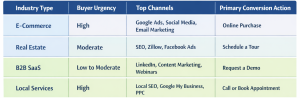
They also benefit because local search behavior is naturally aligned with how these businesses sell. Google says local results surface when customers search for businesses or places near them, and that complete Business Profile information can improve visibility. If a business operates in a category where buyers want a nearby, credible provider and are likely to convert after one or two strong interactions, digital marketing becomes a direct growth channel rather than just an awareness tactic.
The key is that these industries do not simply need “traffic.” They need visibility that leads to qualified demand. That means digital marketing should be built differently for each one based on urgency, trust, service geography, conversion friction, and lead value. Google’s qualified-lead guidance reinforces this because optimization improves when advertisers can distinguish stronger leads from weaker ones.
How does digital marketing work differently for legal services in Indianapolis?
Digital marketing for legal services in Indianapolis works differently because the buyer journey is trust-heavy, often emotionally charged, and usually high value. A prospective client may be searching during a stressful life event, a business dispute, or a situation where credibility matters more than clever branding. That means legal marketing has to do three things especially well: show up locally, establish authority quickly, and reduce hesitation around making contact. Google’s local ranking factors make local discoverability foundational, while its lead-generation guidance supports optimizing toward higher-quality inquiries rather than just lead volume.
For law firms, local SEO and Google Ads are often especially important because searchers tend to use direct service terms when they are ready to evaluate representation. A well-built Business Profile, accurate service information, clear practice-area pages, reviews, and a straightforward consultation path are often more influential than broad social engagement. This follows directly from how Google describes local discovery and from how Ads is designed to capture users at pivotal decision moments.
Legal websites also carry more trust burden than average. Visitors want clear practice focus, proof of experience, local familiarity, and reassurance about what happens next. In a legal context, the gap between a click and a consultation is often determined by credibility, not just page design. That is why marketing for law firms should be measured by consultation quality and retained-client value whenever possible, not merely by front-end cost per lead. Google’s qualified-lead model supports exactly that kind of deeper optimization.
How does digital marketing fit dental, cosmetic, and med spa services in Indianapolis?
Digital marketing for dental, cosmetic, and med spa services in Indianapolis tends to be driven by a mix of trust, convenience, reputation, and offer clarity. These buyers may not always be in crisis, but they are often evaluating providers carefully and making decisions based on proof, professionalism, local accessibility, and expected experience. In these categories, local visibility still matters, but so do reviews, service presentation, and landing pages that reduce uncertainty about outcomes and next steps. Google’s Business Profile guidance supports the importance of complete business information and customer review signals in local discovery.
These industries also benefit from a blend of short-term and long-term channels. Google Ads can help capture demand from people actively searching for specific treatments or providers, while local SEO helps the business build durable visibility in maps and local search results. Google’s lead-generation documentation supports this kind of strategy by treating Ads as a way to reach high-intent users at important moments, while Business Profile guidance supports ongoing local discoverability.
What makes these industries distinct is that aesthetics and reassurance often matter more than urgency alone. The website and landing pages need to communicate outcomes, professionalism, comfort, credibility, and a low-friction booking path. These businesses also benefit from tighter lead qualification, because not every inquiry will fit the treatment, pricing, or service scope. Google Ads’ qualified-lead and converted-lead framework is useful here because it helps advertisers optimize toward leads that are actually likely to become patients or booked appointments.
How does digital marketing support Indianapolis home service companies?
Digital marketing supports Indianapolis home service companies by helping them intercept urgent, practical, local demand. Buyers searching for HVAC repair, plumbing help, roofing work, electrical service, pest control, or restoration are often looking for a provider they can trust quickly. In many of these categories, speed and relevance matter as much as branding. A business that appears prominently, clearly serves the area, and makes it easy to call can win before a competitor with a stronger brand story but weaker execution. Google’s local ranking guidance and Google Ads lead-generation documentation both support this emphasis on immediate, action-oriented visibility.
Home services are also a strong fit for local SEO because so many searches include implicit or explicit local intent. Google explains that local results depend on relevance, distance, and prominence, which means service-area businesses need accurate information and strong local signals if they want to be visible when nearby customers search. For many Indianapolis contractors and service providers, Business Profile performance and local reviews are not side assets. They are part of the lead engine.
Google Ads can be especially valuable in home services because it helps businesses compete for urgent demand without waiting for organic strength to mature. But these campaigns need careful structure, because wasted clicks can add up quickly. Google notes that advertisers can target geographic areas, but also notes elsewhere that lead quality and deeper conversion data matter for optimization. For home service companies, that means measuring booked jobs, qualified service-area leads, and real revenue impact instead of treating every inquiry the same.
How does digital marketing help restoration and emergency-response businesses?
Digital marketing helps restoration and emergency-response businesses by making them visible during moments of immediate need. In categories like water damage, fire damage, mold remediation, or urgent cleanup, the buyer is usually not browsing for educational content first. They are trying to solve a problem now. That makes search-based visibility, fast contact options, and a reassuring page experience especially important. Google’s lead-generation guidance is highly relevant here because it focuses on reaching users at critical moments and improving the quality of leads collected.
In emergency-response industries, the website does not need to be elaborate to perform well. It needs to be clear, fast, local, and credible. Prospects want to know whether the company handles the issue, serves the area, and can respond promptly. Business Profile visibility, local service language, and direct call actions matter more here than long exploratory content. That is consistent with Google’s local ranking model, which rewards strong local relevance and prominence signals.
Because urgency is high, these businesses also need better-than-average lead handling and tracking. A missed call or delayed response can mean lost revenue immediately. While that is partly an operational conclusion, it fits the logic behind Google’s converted-lead framework: deeper sales outcomes help businesses understand which leads actually matter and optimize campaigns more effectively.
How does digital marketing apply to B2B service companies in Indianapolis?
Digital marketing for Indianapolis B2B service companies usually works on a longer and more deliberate buyer journey than home services or emergency-response categories. The prospect may compare providers over days or weeks, involve multiple stakeholders, and care deeply about expertise, credibility, and business fit. That makes digital marketing less about urgency alone and more about qualified discovery, authority, and structured follow-up. Google Ads and local visibility still matter, but the role of content, clear service positioning, and conversion pathways becomes even more important. Google’s lead-generation guidance supports this because it emphasizes the longer path from interaction to lead and from lead to sale.
For B2B firms, digital marketing should often be built around a mix of demand capture and trust development. Searchers may be looking for agencies, consultants, IT providers, financial advisors, or operational partners. They are usually not impressed by generic claims. They want specificity: what the company does, who it serves, why it is credible, and what outcomes it can support. That makes service pages, proof, industry relevance, and a well-structured consultation path especially valuable. Google’s qualified-lead framework fits here because the difference between a weak inquiry and a sales-qualified opportunity is substantial.
Local relevance still matters in B2B, especially when buyers prefer partners who understand the Indianapolis market or can support regional relationships. Google Business Profile guidance remains useful here because local visibility and business completeness influence whether a company appears trustworthy and relevant in nearby searches. Even when the sales cycle is longer, local discoverability can still be the first step in the relationship.
Which digital marketing channels usually work best for each high-intent industry?
The best channels depend on how buyers search, how quickly they need help, and how much trust they need before taking action. For urgent home services and restoration, local SEO, Google Ads, Business Profile optimization, and call-first landing pages are usually the strongest combination because the buyer is trying to solve a problem quickly. For dental, med spa, and cosmetic services, local SEO and Google Ads still matter, but review management, service presentation, and lower-friction booking experiences often play a larger role. For legal and B2B services, authority-building content, strong service pages, consultation-focused calls to action, and tighter lead qualification become more important. Google’s documentation on local ranking, lead generation, and qualified leads supports adapting strategy to intent quality and funnel depth rather than applying one universal formula.
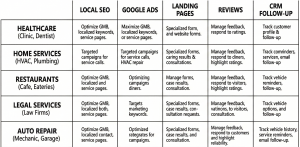
What stays consistent across industries is the need to connect visibility to conversion. A Business Profile that ranks but sends users to a weak page will underperform. Ads that generate clicks but not qualified inquiries will waste budget. Service pages that attract the wrong audience will inflate traffic but not revenue. Google’s emphasis on meaningful business actions and deeper lead-stage tracking makes it clear that channel selection only works when paired with measurement quality.
That is why the strongest Indianapolis strategies are usually hybrid strategies. They use local SEO to compound visibility, Google Ads to accelerate demand capture, landing pages to improve action rates, and lead-quality tracking to steer decisions. The exact mix changes by industry, but the system logic stays the same.
Why does lead qualification matter more in some industries than others?
Lead qualification matters more in some industries because not every inquiry has equal value. In a high-volume, low-ticket environment, a business may be able to tolerate more noise. But in high-intent services, the wrong lead can waste sales time, ad spend, scheduling capacity, and opportunity cost. Google Ads explicitly supports distinguishing qualified leads and converted leads from broader lead activity, which shows how important it is to separate meaningful demand from weak inquiries.
This is especially important in industries with stricter geography, narrower services, or higher close-value differences. A home service company may not want out-of-area inquiries. A med spa may want to filter for treatment fit. A legal firm may want better matter-type screening. A B2B company may need to distinguish between casual interest and a serious buyer. In each case, the front-end marketing may look similar, but the downstream economics are very different. Google’s lead-quality framework supports feeding those differences back into campaign measurement so the system gets smarter over time.
Qualification also protects strategy from misleading success signals. A campaign that produces many cheap leads can look impressive until the sales team reveals they are poor-fit contacts. That is why performance reporting should include not only leads, but qualified leads, appointments, close rates, and revenue by source whenever possible. Google’s own documentation pushes in that direction by encouraging businesses to optimize around deeper outcomes rather than shallow engagement alone.
How can Indianapolis businesses tell which strategy fits their industry best?
An Indianapolis business can usually identify the right strategy by answering a few practical questions. Is the service urgent or deliberative? Is the buyer comparing many providers or a short list? Is trust the biggest barrier, or speed? Does the business need immediate lead flow, long-term visibility, or both? And can the company distinguish qualified leads from weak ones? Google’s lead-generation and local visibility guidance makes these questions useful because both visibility and campaign optimization depend on relevance and meaningful signals.
If the industry relies on immediate service demand, paid search and local SEO often deserve priority. If the category depends more heavily on trust and consultation quality, then service pages, proof, review strategy, and conversion-path design matter even more. If the sales cycle is longer, then digital marketing must support both demand capture and lead nurturing. These are strategic inferences, but they are directly consistent with how Google describes local discovery, lead quality, and the multi-touch path from awareness to sale.
The key is not to ask which tactic is “best” in the abstract. The right question is which mix of visibility, persuasion, and measurement best fits how your buyers actually choose. Once that is clear, digital marketing becomes far more predictable and useful.
Is digital marketing in Indianapolis worth it for high-intent service industries?
Yes — digital marketing in Indianapolis is especially worth it for high-intent service industries because the buyer is often already in motion. These businesses do not have to manufacture demand from scratch as often as they have to capture and convert it well. When a category depends on local discoverability, trust, and a clear path to action, digital marketing becomes one of the most efficient ways to create measurable growth. Google’s Business Profile and Google Ads guidance both support this by tying performance to discoverability, relevance, and better lead optimization.
The payoff is even stronger when strategy fits the industry instead of forcing every business into the same template. A legal firm should not market like an HVAC company. A med spa should not structure conversion paths exactly like a restoration company. A B2B service provider should not rely on the same trust signals as an urgent-response contractor. The businesses that win are usually the ones that match their channels, messaging, and measurement to how buyers in their industry actually search and choose.
FAQ
How do I know if my business is a high-intent service business?
Your business is likely high-intent if customers usually search when they have an immediate need, a serious problem, or a clear buying goal. Industries where leads are valuable and local trust matters tend to fit this model especially well. Google’s lead-generation and qualified-lead guidance aligns closely with that type of buyer behavior.
Are local SEO and Google Ads both necessary for high-intent services?
Not always, but many businesses benefit from using both. Local SEO helps build ongoing visibility in local search and maps, while Google Ads can create faster demand capture when people are actively searching. Google’s documentation supports both roles: Business Profile helps with local visibility, while Ads helps reach users at important action-ready moments.
Which industries usually see the fastest results from digital marketing?
Industries with urgent demand or direct search behavior often see faster results, especially when the business already has clear service pages and strong conversion paths. Home services, restoration, and some legal categories often benefit quickly from demand-capture channels, while trust-heavy categories may need more proof and qualification work. That conclusion is an inference, but it is consistent with Google’s explanation of local intent and lead-generation behavior.
Does every high-intent industry need a different landing page strategy?
Usually yes. Different industries create different concerns for buyers, so the page needs to answer those concerns clearly. Google’s lead-generation guidance and qualified-lead framework both support aligning the user journey with more meaningful outcomes, which is difficult to do with one generic page for every service.
Why is lead quality more important than lead volume?
Lead quality is more important because poor-fit leads consume budget and sales time without producing meaningful revenue. Google Ads explicitly supports qualified-lead and converted-lead tracking to help businesses optimize around stronger outcomes, not just more inquiries.
Can a B2B company use local digital marketing effectively?
Yes. Even when the sales cycle is longer, local discoverability, service relevance, consultation paths, and qualified-lead measurement can make digital marketing very effective for Indianapolis B2B firms. Google’s local visibility and lead-generation guidance both support that model.
Conclusion
Digital marketing in Indianapolis works best for high-intent service businesses when it is shaped around the way their buyers actually decide. Some industries win on urgency. Others win on trust, proof, and consultation quality. Others need a more deliberate B2B approach. But across all of them, the principle stays the same: the goal is not just visibility. The goal is qualified local demand that turns into real opportunities. Google’s guidance on local ranking, lead generation, and qualified-lead optimization strongly supports that approach.
That is why the smartest strategy is rarely a one-size-fits-all package. The right digital marketing system depends on industry, service value, buyer urgency, trust requirements, and lead qualification. Businesses that align those factors well are in a much better position to compete, convert, and grow in Indianapolis.
Why QBall Digital Is Your Ideal Choice for Digital Marketing in Indianapolis?
QBall Digital understands that high-intent service businesses do not all need the same digital marketing strategy. A legal practice, a med spa, a roofing company, and a B2B service provider each bring different buyer behaviors, trust triggers, and conversion challenges. That is why our approach focuses on matching local SEO, paid search, conversion strategy, and measurement to the specific industry rather than forcing every business into one generic framework. Google’s own guidance supports that kind of relevance-first approach across both local discovery and lead optimization.
What makes QBall Digital a strong partner is the focus on qualified growth, not empty activity. We help Indianapolis businesses identify where real demand exists, how their customers actually choose, and which channel mix is most likely to produce better leads. When strategy is tailored to the industry and measured against meaningful business outcomes, digital marketing becomes much more effective and much easier to improve over time.
Ready to Grow With QBall Digital?
If your business depends on high-intent local demand, QBall Digital can help you build a strategy that fits the way your buyers actually search and choose. The right mix of local SEO, Google Ads, landing pages, and lead-quality tracking can help you compete more effectively and turn more of that demand into qualified opportunities. Indianapolis businesses do not need more random traffic. They need a smarter system for turning local intent into real growth.