

AI search optimization is the process of making your business easier for AI-powered search systems to understand, trust, and recommend when people ask questions about services. For service businesses, that means your website, Google Business Profile, reviews, service pages, FAQs, and third-party mentions all need to clearly explain who you help, what you do, where you work, and why customers should choose you.
This matters because search is no longer limited to a list of blue links. Customers now ask Google AI Overviews, Gemini, ChatGPT, Perplexity, and other AI tools full questions like “Who can fix my AC near me?” or “What should I look for in a local roofing company?” Google explains that its generative AI search features still rely on core search systems, crawlable content, useful information, and high-quality pages, which means traditional SEO still matters—but the standard for clarity, trust, and completeness is higher.
For companies that depend on local leads, AI search optimization for service businesses is not a replacement for SEO. It is the next layer of visibility.
Why Is AI Search Changing How Customers Find Service Businesses?
AI search is changing customer behavior because people can now get summarized answers before they click a website. Instead of scanning ten results, users may read an AI-generated answer, compare suggested providers, and contact the company that appears most credible.
That creates a problem for service businesses that only optimize for rankings. A business may rank well but still lose visibility if AI systems cannot extract clear answers from its pages. AI tools need structured, specific, and consistent information. They are looking for useful explanations, local relevance, service details, customer proof, and trusted references across the web.
This is especially important for service-based industries because buyers often search with urgency. A homeowner with a plumbing issue, a business owner comparing marketing agencies, or a patient researching a local provider wants a fast, confident answer. If your business is not represented clearly in AI-generated results, your competitors may shape the conversation before a prospect ever reaches your website.
How Does AI Search Optimization Work for Local and Service-Based Companies?
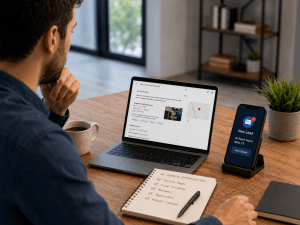
AI search optimization works by improving the signals that help search engines and AI systems identify your business as a relevant, trustworthy answer. The foundation still starts with strong search engine optimization, but it extends into content structure, local business data, reviews, entity consistency, and technical accessibility.
For a service business, this usually means making each core service easy to understand on its own page. Your site should explain the service, who needs it, common problems it solves, pricing or decision factors when appropriate, location availability, and next steps. Vague service pages that say “we provide quality solutions” are weak for AI search because they do not give systems enough specific information to summarize.
Google also notes that local business and ecommerce details can appear in generative AI responses, and that tools such as Google Business Profiles can help business information remain visible in Google Search experiences. That makes your business profile, website, and local landing pages part of the same visibility system—not separate marketing tasks.
What Content Helps Service Businesses Get Cited by AI Search?
The best content for AI search directly answers real customer questions. Each page should begin with a clear answer, then expand with explanation, examples, and practical details. This is why question-based headings, FAQs, comparison sections, and service-specific guides are so useful.
For example, a local HVAC company might create content around “How do I know if my AC needs repair or replacement?” A law firm might answer “What should I bring to a first consultation?” A digital marketing agency might explain “How long does SEO take for a local business?” These questions match how real customers search, and they give AI systems answer-ready information to cite or summarize.
Content should also show experience. Google’s guidance emphasizes helpful, reliable, people-first content, not pages created only to manipulate rankings. For service businesses, experience can appear through project examples, customer scenarios, before-and-after explanations, service area details, process breakdowns, and plain-language advice from people who understand the work.
How Can Technical SEO Support AI Search Visibility?
Technical SEO supports AI search by making your content easier to crawl, index, interpret, and display. If AI systems and search engines cannot access your pages, even strong content may remain invisible.

Start with the basics: fast-loading pages, mobile-friendly design, clean navigation, indexable service pages, accurate metadata, internal links, and no blocked critical content. Google states that technical clarity helps content become ready for discovery and indexing, and that crawlability remains important for generative AI search features.
Structured data also helps clarify your business information. Google explains that Organization markup can identify details such as business name, address, phone number, URL, and logo, while LocalBusiness structured data helps classify local business information for Search. For service businesses, that can support clearer entity recognition across service pages, location pages, articles, and contact pages.
A well-built website matters here. QBall Digital’s website design and hosting services focus on mobile-friendly, SEO-driven structure, speed, usability, and conversion—all of which support both human visitors and search visibility.
Why Do Reviews, Mentions, and Business Data Matter?
Reviews, mentions, and business data matter because AI search systems evaluate more than your own website. They also look at what other sources say about your business. That can include directories, review platforms, industry lists, local publications, social profiles, and authoritative websites.
Research from Ahrefs found that brand web mentions had a stronger correlation with Google AI Overview brand visibility than backlinks in its dataset. That does not mean backlinks are no longer useful. It means service businesses need a broader authority strategy that includes reputation, consistency, and trusted mentions across the web.
For local companies, this includes keeping your name, address, phone number, service areas, hours, categories, and descriptions consistent. It also means encouraging detailed reviews that mention specific services and outcomes. A review that says “great job” is helpful, but one that says “they repaired our water heater the same day and explained the replacement options clearly” gives both customers and AI systems more context.
Service businesses should also connect AI search visibility with broader digital marketing services, including SEO, content, paid search, social media, and conversion tracking. Visibility is only valuable when it turns into qualified leads.
How Should Service Businesses Start With AI Search Optimization?
Service businesses should start with an audit of what AI systems can already understand about them. Search your business name, core services, and local service queries across Google and AI tools. Look for gaps: missing service details, outdated business information, weak reviews, thin location pages, unclear FAQs, or competitors appearing in answers where your company should be visible.
Next, strengthen your core pages. Build or improve pages for your most profitable services. Add clear explanations, customer questions, local context, proof points, and strong calls to action. Internal links should guide visitors from educational content to service pages, case-relevant blog posts, and contact options.
Then connect organic and paid visibility. AI search can influence long-term discovery, while PPC and Google Ads can capture high-intent demand faster. When both channels share tracking, keyword insights, and conversion data, service businesses can see which queries actually produce leads—not just traffic.
Finally, measure more than rankings. Track qualified calls, form fills, booked appointments, Google Business Profile actions, branded searches, local visibility, and AI answer appearances where possible. If your business serves a defined market, QBall Digital’s guide on Indianapolis SEO vs. Local SEO is a useful starting point for understanding how map visibility and organic visibility support different types of leads.
FAQs
Is AI search optimization different from traditional SEO?
Yes, but it builds on traditional SEO rather than replacing it. Traditional SEO focuses on rankings, crawlability, content quality, authority, and conversions. AI search optimization adds emphasis on answer-ready content, entity clarity, brand mentions, structured information, and visibility inside AI-generated responses.
Can small service businesses compete in AI search?
Yes. Small service businesses can compete by being more specific, helpful, and locally relevant than larger competitors. Strong service pages, detailed reviews, accurate business profiles, useful FAQs, and consistent local mentions can help AI systems understand where the business fits.
Does my business need schema markup for AI search?
Schema markup is not a magic ranking tool, but it helps search engines interpret important business details. Organization, LocalBusiness, Service, Article, and FAQ-style structured data can support clarity when used correctly.
How often should service businesses update AI search content?
Service businesses should review core service pages, location pages, and FAQs at least quarterly. Update content when services change, pricing factors shift, new questions come up, reviews reveal common concerns, or competitors begin answering important queries better.
Keep Your Business Easy to Find, Understand, and Trust
AI search rewards clarity. The businesses most likely to benefit are the ones that explain their services well, maintain accurate local data, publish helpful content, earn credible mentions, and make it easy for customers to take action.
For service businesses, the opportunity is practical: answer better questions, structure your site more clearly, strengthen your reputation signals, and connect visibility to leads. The sooner your business adapts, the easier it becomes to build authority before the search landscape gets even more competitive.
Why QBall Digital is Your Ideal Choice for AI Search Optimization?
QBall Digital helps service businesses turn digital visibility into measurable growth. With experience across SEO, PPC, web design, content, and local marketing, the team understands that AI search optimization is not just about being seen—it is about being chosen by the right customers. Their approach connects technical structure, clear messaging, local relevance, and conversion-focused strategy.
QBall Digital also works with small businesses that need practical marketing, not confusing buzzwords. Whether your website needs stronger service pages, better local SEO, improved tracking, or a smarter paid search strategy, QBall Digital can help align each piece of your digital presence around lead generation. That makes your business easier for customers, search engines, and AI systems to understand.
Talk to QBall Digital About Building AI-Ready Visibility
If your service business depends on search-driven leads, now is the time to prepare for how customers are finding answers. Contact QBall Digital to discuss how SEO, local visibility, web design, and paid search can work together to help your business show up where buyers are looking next.