

Semantic SEO helps content rank without forcing the same keyword into every paragraph. Instead, it makes the page’s overall meaning clear by addressing search intent, related questions, relevant concepts, and the connections among them.
A strong semantic SEO strategy still begins with a target keyword. The difference is what happens next: the page expands beyond that phrase to provide the complete information a searcher needs. Better coverage. More natural writing. And more opportunities to appear for closely related searches.
Google’s own guidance supports this people-first approach, emphasizing useful, reliable content created primarily for readers rather than pages designed to manipulate rankings.
What Is Semantic SEO, and How Is It Different From Keyword-Based SEO?
Semantic SEO is the practice of optimizing content around meaning and context, not only exact-match phrases. It helps search engines understand what a page covers, why it is relevant, and which related searches it may answer.
Traditional keyword-based writing often treats one phrase as the entire topic. A page targeting “commercial roof repair,” for example, might repeat those words in nearly every section. Semantic optimization would also explain warning signs, repair options, costs, materials, inspection procedures, timelines, and circumstances that may require replacement.
The keyword still provides direction. It simply stops controlling every sentence.
This approach complements broader SEO services such as technical optimization, content planning, on-page improvements, and user-experience enhancements. Google also recommends writing naturally, organizing information clearly, and creating original content that serves the reader.
How Do Search Engines Understand Meaning, Context, and Relationships?
Search engines analyze combinations of words, not just isolated terms. They consider how language changes meaning, what the searcher is probably trying to accomplish, and whether a page contains information relevant to that purpose.
Google has explained that language-understanding systems such as BERT help its search systems interpret context and intent. Even small words and their relationships can change the meaning of a query. That is why a natural explanation can be more useful than repeatedly inserting an awkward phrase.
Clear headings, descriptive language, examples, and supporting concepts give search systems more context. They also help readers scan the page and find the answer they came for. Both matter.
What Should a Semantic SEO Strategy Include?
A practical semantic SEO strategy should connect keyword research with intent analysis, topic mapping, content structure, internal links, and performance measurement. Each element should make the page more useful—not merely longer.
How Do You Identify the Searcher’s Real Intent?
Start by determining what the searcher expects to accomplish.
Review the pages already appearing for the target query. Look at their formats, recurring subtopics, comparison points, and questions. A search may appear informational but still carry commercial intent. Someone researching “how much does foundation repair cost,” for instance, may be gathering information before requesting an estimate.
Separate the primary need from secondary questions. The primary need should shape the page. Supporting questions should strengthen it.
How Do You Build a Topic and Entity Map?
List the people, products, services, locations, processes, problems, and decisions necessary to explain the subject completely.
For a page about residential solar installation, that map might include panels, inverters, roof condition, energy use, permits, tax incentives, financing, maintenance, and payback periods. Not every related idea deserves a section. Include concepts that help the reader understand the service or make a better decision.
That distinction matters. Topic depth is not the same as topic sprawl.
How Do You Organize the Main Topic and Supporting Content?
Assign one clear purpose to the main page. Then create supporting pages for narrower questions that require deeper treatment.
A broad landscaping page might introduce lawn care, drainage, hardscaping, seasonal maintenance, and landscape design. Separate supporting articles can explore irrigation problems or patio material comparisons without competing with the main page.
This pillar-and-cluster structure gives readers a logical path through the website and reduces the temptation to publish several thin pages targeting minor variations of one keyword.
How Should Internal Links Reinforce Topic Relationships?
Link to supporting pages where they genuinely help the reader continue.
Use anchor text that describes the destination instead of vague phrases such as “click here.” Google states that descriptive internal links can help people and Google understand a site and find related pages more easily. Every important page should also be linked from at least one other page on the website.
When Does Structured Data Add Useful Context?
Structured data can identify specific types of visible information, such as an article, organization, product, event, or local business. It may also make a page eligible for supported rich-result features.
It is not a shortcut to higher rankings. The markup must accurately represent the page, and Google does not guarantee a special search appearance even when it is implemented correctly.
How Can You Write Naturally Without Losing Keyword Relevance?
Use the target phrase in places where it clearly identifies the subject, then write the rest of the page for comprehension.
Answer each heading immediately. Use accurate synonyms, examples, related terminology, and concrete details. Explain how a process works, why it matters, when it applies, and what can go wrong. Those elements add meaning without artificial repetition.
During editing, remove sentences that restate the previous paragraph without adding value. Also review AI-assisted copy carefully. As QBall Digital’s guide to the advantages and limitations of AI in digital marketing explains, automation can support productivity, but human judgment remains essential for accuracy, originality, and brand alignment.
How Can Semantic SEO and PPC Strengthen Each Other?
PPC data can reveal the exact language prospects use before they become leads or customers.
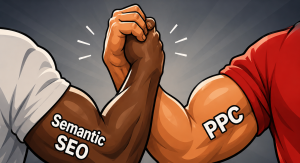
Search-term reports may uncover high-converting questions, service modifiers, objections, and location-based searches. Those findings can guide organic landing pages, FAQs, comparison articles, and supporting content. Organic performance can then reduce dependence on paid traffic for some searches while PPC continues capturing immediate demand.
QBall Digital’s Google Ads management approach connects keyword selection and intent with landing-page relevance, conversions, and return on ad spend. Used together, SEO and PPC provide a clearer picture of which searches generate business—not just traffic.
How Can You Measure Whether Semantic SEO Is Working?
Measure the performance of the whole topic, not one ranking position.
In Google Search Console, monitor impressions and clicks across related queries, changes in average position, and the number of relevant searches producing visibility. Combine that information with analytics data to evaluate landing-page engagement, internal-link activity, calls, forms, sales, and qualified leads. Google recommends using Search Console and analytics together to understand what happens before and after a visitor reaches the site.
Technical performance still matters. Slow or unstable pages can weaken the experience even when the content is excellent, making QBall Digital’s Core Web Vitals guide a useful companion resource.
Frequently Asked Questions About Semantic SEO
Does semantic SEO replace keyword research?
No. Keyword research identifies search demand, audience language, competition, and intent. Semantic research expands that foundation into a complete, useful answer.
How many times should a keyword appear?
There is no universal keyword count that guarantees rankings. Use the phrase enough to establish the subject clearly, but revise any repetition that makes the writing sound forced or adds no new information.
What are semantic keywords?
“Semantic keywords” is commonly used to describe related terms, concepts, questions, and entities associated with a topic. They should emerge naturally from complete coverage rather than being inserted from a checklist.
Do topic clusters improve semantic relevance?
Well-planned clusters can make relationships among pages clearer. The main page covers the broad subject, supporting pages answer narrower questions, and descriptive internal links connect them.
Can semantic SEO support visibility in AI-generated search results?
Clear, well-structured content may be easier for search and answer systems to interpret, but inclusion or citation cannot be guaranteed. Traditional SEO fundamentals remain important. QBall Digital’s guide to Google AI Overviews and SEO explains how direct answers, supporting evidence, internal links, and trust signals can prepare content for AI-influenced search.
What Should You Do Next?
Review one important page on your website. Highlight repetitive wording, unanswered questions, missing examples, and places where a useful internal link would improve the journey.
Then rebuild the page around the searcher’s full decision—not a density target. One clear subject. Complete coverage. Natural language. That is a stronger foundation for rankings, engagement, and conversions.
Why QBall Digital Is Your Ideal Choice for Semantic SEO?
QBall Digital approaches content as part of a complete growth system. Its team connects keyword research, search intent, on-page content, technical performance, website structure, and conversion goals instead of optimizing each element in isolation. Each semantic SEO strategy is shaped around how real customers research services and what they need before taking action.
The agency also brings SEO and PPC together, allowing paid-search insights to strengthen organic planning while content performance informs future advertising decisions. This integrated approach helps businesses pursue qualified traffic, stronger landing pages, and measurable leads—not rankings that look impressive but fail to produce revenue. Learn more about why businesses choose QBall Digital.
Build a Smarter Search Strategy With QBall Digital
Your content should answer more questions without sounding repetitive. Contact QBall Digital to identify gaps in your keyword targeting, topic coverage, internal links, and search campaign strategy.