

Local businesses do not just need more traffic. They need better prospects: people who have a real problem, live or work in the service area, and are likely to book, request a quote, call, visit, or buy. That is why lead magnet ideas for local businesses should be judged by lead quality, not just download volume. A lead magnet gives a visitor something valuable in exchange for contact information, creating a lower-friction step before the sale. HubSpot describes lead magnets as resources offered in exchange for a prospect’s contact information, while Google’s local lead generation guidance frames lead generation as turning strangers into people who have demonstrated interest in a business.
For local companies running PPC, SEO, social media, or Google Business Profile campaigns, the right offer can turn passive visitors into trackable leads. The key is choosing an offer that solves a specific local problem and naturally leads to the next commercial step. A roofing company does not need a generic home improvement ebook. It needs a storm damage checklist, roof replacement cost guide, or inspection offer that helps identify people with an active need.
What is a lead magnet for a local business?
A lead magnet for a local business is a free, useful offer given in exchange for a prospect’s contact details, such as an email address, phone number, or form submission. It can be a checklist, guide, coupon, quiz, calculator, consultation, audit, template, event invite, or planning resource. HubSpot notes that lead generation forms commonly collect information in exchange for an offer such as an ebook, case study, report, or webinar.
The difference between a lead magnet and a newsletter signup is intent. “Join our newsletter” asks the visitor to care about the business. A strong lead magnet starts with what the customer already cares about: fixing a problem, understanding cost, reducing risk, making a better decision, saving time, or getting a clear next step.
For a local business, the offer should connect directly to the paid service. A dentist might offer a “new patient smile assessment.” A plumber might offer an emergency shutoff checklist. A med spa might offer a skin treatment quiz. A real estate agent might offer a neighborhood buying guide. Each one attracts people who are closer to a service conversation than someone who simply entered an unrelated giveaway.
That connection matters because local businesses often have limited service areas, limited appointment capacity, and higher pressure to make every marketing dollar count. Google’s local lead generation guide points out that local lead generation is more geographically targeted than broad ecommerce because a local provider can only serve people within a defined market.
Why do local businesses need lead magnets to attract better prospects?
Local businesses need lead magnets because many interested visitors are not ready to call, book, or buy the first time they land on a website. They may still be comparing prices, checking credibility, asking a spouse, waiting for a payday, researching symptoms, or deciding whether the problem is urgent enough to solve now.
This is especially important for paid traffic. In PPC, every click has a cost, but not every visitor is ready for a hard “contact us” CTA. Google’s own local lead generation guidance explains that PPC charges when someone clicks, but a click only shows engagement with the ad, not readiness to buy.
A lead magnet creates a middle step. Instead of losing a visitor who is not ready to schedule, the business can capture interest, deliver value, and follow up. That follow-up can educate the prospect, answer objections, share proof, and invite a higher-intent action later. Mailchimp describes lead nurturing emails as a sequence designed to guide prospects through the funnel with relevant information based on where they are in the buyer journey.
The best local offers also help qualify prospects. A “kitchen remodel budget planner” naturally attracts homeowners thinking about a renovation. A “first-time buyer mortgage readiness quiz” attracts people with a defined buying goal. A “free commercial HVAC energy audit” attracts business owners or property managers who may control a meaningful budget.
What makes a lead magnet effective for a local business?
An effective local lead magnet solves one specific problem for one specific type of customer and gives them a useful result quickly. It should feel practical, relevant, and connected to the customer’s next decision.
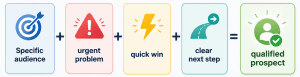
The strongest offers usually share four traits. They are specific enough to attract the right person, valuable enough to justify sharing contact information, simple enough to consume quickly, and closely tied to the service being sold. HubSpot’s lead form guidance emphasizes that effective lead capture depends on clearly communicating the value proposition behind the form.
A weak offer says, “Download our free guide.” A stronger offer says, “Get the 10-point checklist to prepare your home before a roof inspection.” The second version is more specific, more useful, and more likely to attract a person with a relevant need.
The format should match the decision. A checklist works well when the prospect needs preparation. A calculator works well when cost is the main concern. A quiz works well when people are unsure what service fits their situation. A consultation or audit works well when expert diagnosis is part of the buying process.
How do you choose the right lead magnet for your local business?
Choose the right lead magnet by matching the offer to your customer’s buying intent, the value of the service, and the action you want the person to take next. The more expensive, complex, or trust-based the service is, the more educational and diagnostic the offer usually needs to be.
For urgent services, use fast, practical resources. A plumber, locksmith, restoration company, or emergency dentist might use a checklist, emergency guide, or priority call offer. These prospects do not want a 40-page ebook. They want immediate clarity and fast help.
For high-ticket services, use decision-support resources. Contractors, financial advisors, attorneys, real estate agents, medical providers, and B2B service companies often benefit from buyer guides, cost calculators, audits, comparison tools, and consultation offers. These formats help prospects understand risk, budget, timeline, and fit before they speak with the business.
For repeat-purchase businesses, use offers that encourage a first visit or return visit. Restaurants, salons, gyms, boutiques, spas, and hospitality businesses can use birthday rewards, local VIP clubs, tasting invites, first-purchase offers, or seasonal event guides. The offer should create a reason to visit without turning the brand into a constant discount machine.
Which lead magnets work best for local service businesses?
The best lead magnets for local service businesses help prospects understand their problem, prepare for the service, or take the first step with less risk. They should make the buying conversation easier for both the customer and the business.
- A free estimate preparation checklist works well for contractors, roofers, painters, landscapers, remodelers, and moving companies. It helps prospects gather details, photos, measurements, priorities, and budget expectations before requesting a quote. That can improve the quality of the inquiry and reduce wasted back-and-forth.
- A “what to ask before hiring” guide works well in trust-heavy categories. Attorneys, accountants, dentists, financial advisors, childcare providers, and medical clinics can use this format to educate prospects while subtly showing what separates a credible provider from a risky one.
- A local pricing or cost planning guide works well when price anxiety blocks action. A remodeler might explain what affects kitchen renovation costs. A med spa might explain treatment package ranges. A real estate agent might explain hidden buyer costs in a specific market. The goal is not always to list exact prices; it is to help prospects understand the variables.
- A free diagnostic audit works well for businesses where the provider must inspect, review, or assess before recommending a solution. Examples include HVAC tune-ups, website audits, insurance reviews, legal case evaluations, tax reviews, energy audits, and marketing assessments.
- A before-and-after case study download works well when proof drives action. Local service buyers often want to see results from people like them. A case study can show the problem, process, timeline, outcome, and customer experience in a way that builds confidence before the sales call.
Which lead magnets work best for local retail, restaurant, and hospitality businesses?
Retail, restaurant, and hospitality lead magnets work best when they offer immediate value, exclusivity, convenience, or a reason to return. These customers are usually making faster decisions than high-ticket service buyers, so the offer should be simple and easy to redeem.
- A first-purchase offer can work well when the business wants to convert new visitors into first-time customers. A boutique might offer a small welcome discount. A salon might offer a new-client add-on. A restaurant might offer a free appetizer with signup. The key is to make the incentive attractive without eroding long-term margin.
- A birthday or anniversary reward works well for businesses that benefit from repeat visits. Restaurants, spas, salons, gyms, and entertainment venues can use these offers to stay connected and bring customers back during moments when they are already likely to spend.
- A VIP local customer club can be stronger than a generic email list. Instead of asking people to subscribe, the business can offer early access to events, new menu items, product drops, private sales, local workshops, or limited reservations. This gives the customer a reason to feel included.
- A gift guide, style guide, menu sampler, or event planning checklist works well when the customer needs help choosing. A florist might offer a wedding flower checklist. A wine-free gourmet shop could offer a local gift basket guide. A restaurant could offer a private event planning checklist. A hotel or venue could offer a local weekend itinerary.
Discounts can help when the purchase is low-risk and margin allows it. They are less effective when they attract one-time bargain hunters who never return. A useful rule: use discounts to reduce first-visit friction, but use value, experience, and follow-up to earn the second purchase.
How can local businesses use quizzes and assessments as lead magnets?
Quizzes and assessments work because they feel personalized and help prospects understand what they need before speaking with a business. They also help the business segment leads based on interest, urgency, service fit, or budget.
A med spa might use “Which facial treatment fits your skin goals?” A solar company might use “Is your home a good candidate for solar?” A mortgage broker might use “How ready are you to buy your first home?” A gym might use “What training plan fits your schedule and goals?” A marketing agency might use “Where is your lead generation system leaking revenue?”
The advantage of a quiz is that it can qualify the prospect without feeling like a sales form. Instead of asking only for name, email, and phone number, the business learns what the person wants, what problem they have, how soon they need help, and which service category applies. That information can shape the follow-up.
A quiz should not feel invasive. Ask only what improves the result. For example, a home services quiz may need property type, timeline, and main concern. It probably does not need household income. A clinic may need symptoms or goals, but it should avoid collecting sensitive details unless the form and process are designed for privacy and compliance.
How can lead magnets improve PPC campaign performance?
Lead magnets can improve PPC performance by giving paid visitors a relevant, lower-commitment reason to convert instead of leaving the landing page. They are especially useful when a visitor has interest but is not ready to call, book, or request a quote immediately.
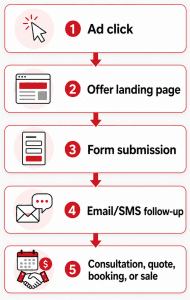
Google recommends that landing pages closely match the ad and keywords because visitors expect the page to reflect what they clicked. Google also says the landing page should mirror the call to action in the ad, such as prominently featuring a signup form when the ad promotes a free tour.
That principle applies directly to lead magnets. If the ad promotes a “free roof inspection checklist,” the landing page should focus on that checklist, not a general roofing homepage. If the keyword is about “how much does Invisalign cost,” the offer might be a treatment cost guide or consultation request, not a generic dental newsletter.
Lead magnets also create retargeting and first-party audience opportunities. Google Ads allows advertisers to reach people who previously visited a website or interacted with a business, and Customer Match lets advertisers use customer-provided online or offline data to re-engage people across Google surfaces when policy and consent requirements are met.
Measurement is where PPC lead magnets become most valuable. Google Ads conversion setup supports tracking actions such as phone calls and offline conversions, while Google Analytics can measure a specific form submission as a key event.
How do you create a lead magnet landing page that converts?
A lead magnet landing page converts when it makes the offer’s value obvious, reduces friction, and clearly tells visitors what happens next. The page should focus on one promise, one audience, and one conversion action.
The headline should name the problem or outcome. “Download Our Free Guide” is weak. “Get the Homeowner’s Checklist for Comparing HVAC Replacement Quotes” is stronger because it tells the visitor what they will get and why it matters.
The body copy should explain outcomes, not just contents. Instead of saying, “Includes five pages of tips,” say, “Learn what to ask before approving an estimate, which warranty terms matter, and how to avoid surprise installation costs.” This makes the offer feel practical.
The form should collect enough information to follow up without creating unnecessary resistance. For many offers, name and email may be enough. For higher-intent offers, phone number, ZIP code, service type, and timeline can help qualify the lead. HubSpot’s lead form guidance stresses that effective forms should communicate value clearly and may need testing to find the best structure for a specific audience.
Mobile experience matters, especially for PPC. Google says effective landing pages are key to conversions from Google Ads traffic and notes that improving mobile speed is one of the best ways to get better results from mobile ads. Google also reports that, in retail, a one-second mobile delay can affect mobile conversions by up to 20%.
How should local businesses follow up after someone downloads a lead magnet?
Local businesses should follow up with a short sequence that delivers the resource, builds trust, answers common objections, and invites the prospect to take the next step. The lead magnet starts the relationship; the follow-up turns interest into action.
The first email should deliver the resource immediately and restate the value. It should also set expectations: what the prospect will learn, how to use it, and what to do next. For appointment-based businesses, this first email can include a soft CTA such as “schedule a consultation” or “reply with your question.”
The second email can explain why the problem matters. A roofing company might explain signs of hidden damage. A dentist might explain how treatment delays can affect future options. A CPA might explain why tax planning is more effective before year-end than after deadlines approach.
The third email should add proof. Use testimonials, before-and-after examples, local case studies, review snippets, certifications, or a simple story about a customer with a similar problem. Google Business Profile performance data can also help businesses understand how customers interact with their profile through views, searches, and actions from organic search and Google Ads.
The fourth and fifth emails can answer objections and invite the next step. Address price, timing, insurance, service area, preparation, process, or trust concerns. Mailchimp explains that lead nurturing emails keep prospects engaged with relevant content until they are prepared to take the next step.
For businesses using email follow-up, compliance matters. The FTC explains that the CAN-SPAM Act applies to commercial messages, gives recipients the right to stop receiving emails, and sets requirements for commercial email.
Are discounts good lead magnets for local businesses?
Discounts can work well for some local businesses, but they are not always the best choice when the goal is to attract qualified, profitable prospects. They are strongest when the purchase is simple, the margin is healthy, and the business has a plan to earn repeat visits.
Discounts often work for restaurants, salons, fitness studios, retail shops, entertainment venues, and some first-appointment offers. In these cases, the prospect may already be interested, and the offer reduces friction enough to create a first purchase.
Discounts can be weaker for high-ticket, expert, or low-margin services. A remodeler, attorney, financial advisor, medical specialist, or B2B service provider may attract better prospects with an audit, guide, consultation, assessment, or decision tool. Those offers position the business around expertise instead of price.
A discount also needs tracking. Use a unique code, dedicated landing page, CRM tag, or point-of-sale note so the business can measure whether the offer creates real revenue. Downloads and redemptions are not enough. The important question is whether the offer brings in customers who return, refer, or buy profitably.
Can a lead magnet attract the wrong people?
Yes, a lead magnet can attract the wrong people if the offer is too broad, too generous, unrelated to the paid service, or designed only for volume. A large list of poor-fit contacts can waste sales time, email costs, ad spend, and follow-up energy.
Generic giveaways are the most common problem. A free tablet, gift card, or unrelated prize may generate many form submissions, but those people are entering for the prize, not because they need the service. A contractor will learn more from a renovation budget planner than from a general sweepstakes entry.
The topic itself should qualify the lead. A “home renovation budget planner” attracts homeowners considering a project. A “commercial lease review checklist” attracts business owners or operators with a legal need. A “new patient dental implant guide” attracts people researching a specific treatment.
Form fields can help, but they should be used carefully. ZIP code, timeline, service type, and budget range can improve qualification. Too many fields too early can reduce conversions. The best approach is to ask for the minimum information needed at each step, then gather more context during follow-up or booking.
How do you measure whether a lead magnet is working?
Measure a lead magnet by tracking not only downloads, but also lead quality, booked appointments, sales, and cost per qualified lead. A campaign that produces fewer leads can still be better if those leads are more likely to become paying customers.
Start with landing page conversion rate. This shows whether the offer and page are compelling enough to turn visitors into contacts. Unbounce’s benchmark report is based on more than 57 million conversions and over 41,000 landing pages, which reinforces that landing page performance should be evaluated with context rather than a single universal conversion target.
Then track cost per lead and cost per qualified lead. PPC campaigns should not stop at form fills. Google Ads conversion tracking can help identify which ads, keywords, ad groups, and campaigns drive valuable phone calls, while Google Analytics can mark specific lead form submissions as key events.
For businesses with offline sales, track what happens after the lead enters the CRM. Google’s enhanced conversions for leads can use hashed first-party lead information to improve conversion measurement and help connect offline outcomes back to ad interactions.
Useful metrics include landing page conversion rate, cost per lead, cost per qualified lead, booked-call rate, quote-request rate, close rate, revenue per lead, email engagement, time to conversion, and lead source. For local businesses, the most important number is not always the cheapest lead. It is the most profitable source of qualified prospects.
What are the most common lead magnet mistakes local businesses should avoid?
The most common mistakes are creating an offer that is too generic, asking for too much information too soon, and failing to follow up. A lead magnet is not just a PDF or coupon. It is part of a conversion system.
One mistake is offering something unrelated to the paid service. A restaurant can use a birthday reward because it connects to a future visit. A roofing company should avoid unrelated sweepstakes because the contact list will not reflect actual roofing demand.
Another mistake is sending paid traffic to a generic page. Google recommends matching landing pages closely to ads and keywords because visitors are more likely to leave when they do not immediately find what they expect.
A third mistake is measuring only the first conversion. A campaign can look successful because many people downloaded the offer, but fail later because few leads booked, bought, or qualified. Google’s local lead generation guidance emphasizes conversion tracking as part of understanding cost per conversion, conversion rates, and the interactions that happen before conversion.
The final mistake is having no nurture plan. A lead magnet without follow-up is like collecting business cards and never contacting anyone. The value comes from the full system: offer, landing page, form, tracking, segmentation, follow-up, sales process, and optimization.
FAQ
What is the easiest lead magnet for a local business to create?
The easiest lead magnet is usually a one-page checklist, short guide, first-time customer offer, or consultation request. These formats are quick to produce and easy for prospects to understand.
For example, a landscaper could create a seasonal yard maintenance checklist. A dentist could create a new-patient visit guide. A contractor could create a quote comparison checklist. The format does not need to be long; it needs to be useful.
What type of lead magnet gets the most qualified local leads?
The most qualified leads usually come from offers that match buying intent. Audits, assessments, quote-preparation checklists, buyer guides, quizzes, consultations, and cost planners tend to attract people who already have a relevant problem.
A coupon may attract more volume, but an audit or diagnostic offer often attracts people who are closer to needing expert help. The right choice depends on the business model, margin, sales cycle, and customer urgency.
Should a local business use a coupon as a lead magnet?
A local business should use a coupon when the offer supports profitable first-time purchases or repeat visits. Coupons can work well for restaurants, salons, retail stores, gyms, spas, entertainment venues, and simple appointment-based services.
For high-ticket or expertise-driven services, a coupon may not be the best first impression. A guide, consultation, quiz, assessment, or audit can attract prospects who value expertise rather than only price.
How long should a lead magnet be?
A lead magnet should be as long as needed to deliver the promised value and no longer. A one-page checklist can outperform a long ebook if it helps the prospect solve a specific problem quickly.
Local customers are often busy and action-oriented. They may prefer a clear checklist, calculator, short guide, or quiz result over a dense resource that takes too long to read.
Where should a lead magnet be placed on a website?
A lead magnet should be placed where buyer intent already exists. Good locations include service pages, PPC landing pages, relevant blog posts, homepage sections, exit-intent popups, Google Business Profile-linked pages, and thank-you pages.
The offer should match the page. A dental implant guide belongs on an implant page. A storm damage checklist belongs on a roofing or restoration page. A first-visit offer belongs near appointment-focused content.
Can lead magnets work without email marketing?
Lead magnets can capture leads without email marketing, but follow-up usually makes them more effective. Without follow-up, many prospects will download the resource and never take the next step.
Email, SMS, phone follow-up, retargeting, and CRM reminders can all help. The best channel depends on the business, offer, urgency, and the contact permissions collected.
How often should a local business update its lead magnet?
A local business should update its lead magnet when customer questions, pricing, services, seasons, regulations, offers, or market conditions change. Some resources may only need annual updates, while seasonal guides may need changes several times per year.
A good habit is to review lead magnets quarterly. Check whether the offer is still accurate, whether the landing page still converts, and whether the leads are turning into real opportunities.
Conclusion
The best lead magnet ideas for local businesses are not random freebies. They are focused offers that help the right prospects solve a specific problem, understand their options, and take a clear next step toward a quote, consultation, booking, visit, or purchase.
For local businesses investing in PPC, SEO, social media, or Google Business Profile visibility, lead magnets can turn more of that attention into measurable opportunities. The real goal is not to build the biggest list. It is to create a system that attracts qualified prospects, follows up intelligently, and turns local interest into revenue.
Why QBall Digital is Your Ideal Choice for Lead Magnets?
QBall Digital helps local businesses connect lead magnet strategy with the marketing channels that actually drive demand. Instead of creating generic downloads, QBall Digital focuses on offers that match buyer intent, service value, PPC campaigns, and landing page conversion goals. That means each campaign is built around business outcomes, not vanity metrics. The result is a lead generation system designed to attract prospects who are more likely to call, book, request a quote, or become customers.
QBall Digital also understands that a strong lead magnet is only one part of the funnel. The offer, landing page, form, tracking setup, follow-up sequence, and PPC strategy all need to work together. With the right structure, local businesses can capture more value from paid clicks and organic visitors while improving lead quality over time. QBall Digital brings the strategy, execution, and optimization needed to turn interest into measurable growth.
Turn More Local Clicks Into Qualified Leads With QBall Digital
Your website and PPC campaigns should do more than generate traffic. They should create real opportunities with people who are actively interested in what your business offers.
Book a lead generation strategy consultation with QBall Digital to build a smarter lead magnet funnel that attracts better prospects, improves conversion tracking, and helps turn local traffic into revenue.