
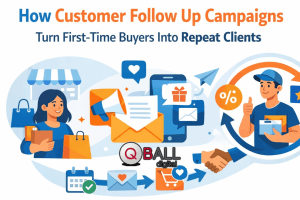
Winning the first sale is expensive. The harder, and often more profitable, challenge is getting that customer to come back. Customer follow up campaigns solve that problem by giving brands a structured way to stay relevant after purchase, build trust, encourage product adoption, and create a clear path to the second order. That is why major platforms like Google now treat retention and customer lifetime value as explicit lifecycle goals rather than side metrics.
For lifecycle marketing, the real opportunity begins after checkout. A customer who has already bought from you has crossed the biggest trust barrier. If your follow-up is timely, useful, and personalized, you can turn that first transaction into repeat revenue, stronger loyalty, and a higher lifetime value over time. Shopify, BigCommerce, and Mailchimp all frame post-purchase and retention marketing around that same idea: repeat buying grows when brands continue the relationship instead of ending communication at order confirmation.
What are Customer Follow Up Campaigns?
Customer follow up campaigns are post-purchase messages sent to existing customers to move the relationship forward. They can be automated or manual, and they usually appear through email, SMS, phone, on-site messaging, or remarketing. Their purpose is not just to “check in,” but to reassure, educate, support, reactivate, and encourage another valuable action. HubSpot defines retention emails in this spirit: messages sent to existing customers to encourage them to continue using your product or buying from your business.
In lifecycle marketing, these campaigns sit after the first conversion and before the customer goes inactive. That makes them different from lead nurturing, which targets prospects before purchase, and different from win-back campaigns, which target people who have already drifted away. A strong retention strategy uses follow-up campaigns across multiple stages: confirmation, onboarding, usage, review collection, reorder reminders, loyalty invitations, and reactivation. Google’s customer lifecycle guidance reflects the same broader view by separating new customer acquisition, high-value customer acquisition, and re-engagement of existing or lapsed customers.
Why Do Customer Follow Up Campaigns Matter After the First Purchase?
They matter because the first purchase does not guarantee a second one. Without follow-up, the buyer may forget your brand, struggle to use the product, lose confidence in the purchase, or simply never receive a relevant reason to return. Post-purchase communication reduces that drop-off by extending the customer experience beyond checkout. Mailchimp specifically notes that post-purchase emails can improve loyalty and increase sales and revenue, while BigCommerce ties retention marketing directly to repeat purchases and customer lifetime value.
They also matter because retention is measurable and strategically valuable. Google Ads now includes retention and customer lifetime value as lifecycle goals, which shows how central repeat customer value has become to performance marketing. In Google Analytics 4, the retention overview and user lifetime reports are built to help marketers measure returning-user engagement and value over time, including revenue generated in the first 120 days.
At the business level, retention compounds. Bain’s long-cited finding that a 5% increase in retention can raise profits by 25% to 95% is still widely referenced because it captures the core economics: brands that keep the right customers usually earn more from them over time.
How Do Customer Follow Up Campaigns Fit Into Lifecycle Marketing?
Customer follow up campaigns are the operating system of lifecycle marketing after the first sale. Lifecycle marketing is about responding to where the customer is, not blasting the same message to everyone. In practice, that means your campaign logic should change as the relationship changes. Google describes lifecycle goals in exactly those terms: businesses should increase value from both new and existing customers, including re-engaging lapsed customers.

A useful lifecycle sequence often looks like this. First comes the reassurance phase, where order confirmations and shipping updates reduce uncertainty. Then comes the onboarding phase, where educational messages help the customer get value from what they bought. After that comes the expansion phase, where reviews, replenishment reminders, cross-sell recommendations, and loyalty offers encourage a second or third purchase. Finally, if the customer goes quiet, reactivation campaigns try to restore engagement before churn becomes permanent. Mailchimp, BigCommerce, and HubSpot all support pieces of this framework, but the lifecycle advantage comes from treating those messages as one connected system rather than isolated sends.
What Types of Customer Follow Up Campaigns Turn One-Time Buyers Into Repeat Clients?
The best customer follow up campaigns match the customer’s immediate need. Right after purchase, reassurance matters most. Customers want proof that the order was received, that expectations are clear, and that your brand is trustworthy. Transactional email customization guidance from BigCommerce emphasizes how these messages contribute to the customer experience, which matters because the first post-purchase contact often shapes confidence in the brand.
Next comes the thank-you and onboarding stage. A thank-you message can reinforce appreciation, but its real job is to keep momentum alive. That may mean explaining how to get started, how to use the product correctly, what to expect next, or where to get help. HubSpot’s post-purchase email guidance points to the “shopping high” as a powerful moment to build loyalty, and that is exactly when educational content performs well.
Review and feedback campaigns come after the customer has had enough time to form an opinion. These messages do more than collect social proof. They surface product friction, create service recovery opportunities, and signal that the brand cares about the outcome, not just the order.
Replenishment campaigns work especially well for consumables and repeat-use products. When timed to expected depletion, they remove friction by reminding customers before they run out. Cross-sell and upsell messages work when they feel like extensions of the original purchase, not generic promotions. BigCommerce notes that syncing purchase history and customer groups to email platforms supports precisely this kind of targeted upsell and cross-sell messaging.
Finally, loyalty and win-back campaigns are designed for later stages. Loyalty invitations give customers a reason to stay engaged before they drift, while reactivation messages target those who have gone quiet. Google’s retention goal explicitly focuses on re-engaging lapsed customers, which makes win-back a natural part of the broader follow-up ecosystem.
When Should You Send Customer Follow Up Campaigns?
The best timing depends on the product, buying cycle, and customer behavior, but the principle is consistent: send based on customer context, not arbitrary calendar dates. The first message should usually be immediate, because confirmation and reassurance are time-sensitive. After that, timing should align with the customer’s likely experience. A product that needs setup may need education within the first few days. A consumable may need a reorder reminder weeks later. A service business may need a satisfaction check once the client has experienced the result.
Google’s lifecycle and retention tools reinforce this trigger-based logic. They are designed around user value and re-engagement signals, not just one-off campaigns. In analytics, repeat-purchaser audiences and retention reports also work best when you understand elapsed time since first purchase or last engagement.
A practical schedule for many brands looks like this: immediate confirmation, a value-driven follow-up within 3 to 7 days, a feedback request once usage is established, a personalized offer or recommendation later in the purchase window, and a reactivation message if the customer stays inactive beyond the normal repurchase period. The point is not the exact number of days. The point is sending each message when it is most likely to help the customer take the next step.
How Do You Build a Customer Follow Up Campaign Strategy that Actually Converts?
Start with the business goal. A campaign cannot convert consistently if the brand has not decided what “conversion” means. For one company, it may be a second purchase within 30 days. For another, it may be account activation, review submission, subscription renewal, or reactivation of a lapsed buyer. Google’s lifecycle settings are built around this idea of assigning value to customer stages rather than treating all conversions equally.
Next, segment your customer base. Segmenting by product category, average order value, location, purchase date, buying frequency, or engagement history helps you send more relevant messages. BigCommerce highlights customer groups based on purchase history, order total, order date, and location, while Google Analytics supports repeat-purchaser audiences and lifetime analysis. That combination tells you two things: who should receive the message, and how valuable that customer group is over time.
Then define your triggers. A trigger could be a completed purchase, product delivery, first login, lack of product usage, no reorder by expected replenishment date, or ninety days of inactivity. A trigger-based system is usually stronger than a newsletter-heavy approach because it connects outreach to customer behavior.
After that, match the message to the stage. Early messages should reduce uncertainty and help the customer succeed. Mid-stage messages should encourage engagement, reviews, or add-on purchases. Late-stage messages should either deepen loyalty or recover attention before churn.
Finally, measure and refine. Monitor repeat purchase rate, time to second purchase, revenue per recipient, reactivation rate, and unsubscribe rate. GA4’s retention and user lifetime views make this kind of measurement easier because they connect behavior and value over time, rather than reporting only top-level email engagement.
How Can Personalization Improve Customer Follow Up Campaign Performance?
Personalization improves performance because it makes the message feel earned. Customers expect relevance. Nielsen Norman Group notes that users expect content to match their individual needs, and that is especially true in retention marketing, where generic follow-up often feels lazy or intrusive.
The strongest personalization usually comes from behavioral signals, not just name fields. Purchase history can guide product recommendations. Order value can shape offer strategy. Product category can determine onboarding content. Geography can affect timing, seasonality, and shipping expectations. Support history can indicate whether the customer needs recovery messaging instead of another sales nudge. BigCommerce’s segmentation capabilities and post-purchase lifecycle guidance both point toward this kind of practical relevance.
Personalization also helps protect the customer relationship. If someone just received delayed shipping or opened a support ticket, a cheerful upsell email may hurt more than help. Relevant follow-up means understanding what has happened, what the customer likely needs next, and what message would feel useful at that exact stage.
Which Channels Work Best for Customer Follow Up Campaigns?
Email is usually the foundation because it is flexible, scalable, and well-suited to confirmations, onboarding, education, replenishment, loyalty, and win-back. BigCommerce and Mailchimp both position automated email as a core retention channel because it can support repeat purchases across the customer lifecycle.
SMS works best when the message is urgent, brief, and genuinely helpful. Shipping updates, appointment reminders, limited-time replenishment prompts, and concise loyalty nudges often perform well there. Phone or sales-led outreach can be valuable for high-ticket purchases, B2B relationships, service recovery, and accounts where the next purchase depends on consultation rather than impulse.
On-site messaging and paid remarketing can reinforce follow-up campaigns by keeping your brand visible between inbox visits. Google’s customer lifecycle framework is especially useful here because it treats retention and re-engagement as part of broader performance marketing, not only CRM.
The best channel mix depends on the customer and the offer, but consistency matters more than novelty. A follow-up system works best when channels complement one another instead of repeating the same message everywhere.
What Should You Include in a High-Converting Customer Follow Up Message?
A high-converting follow-up message starts with context. The customer should immediately understand why they are receiving it, based on a recent purchase or interaction. That sounds simple, but many weak campaigns fail because they begin with vague “just checking in” language instead of grounded relevance.
The second ingredient is useful value. That may be setup instructions, a care tip, a reminder about a consumable, a compatibility suggestion, or a loyalty benefit. Mailchimp and HubSpot both treat post-purchase messaging as an opportunity to deepen loyalty by being helpful, not merely promotional.
The third ingredient is a clear next step. A review request should ask for a review. A replenishment message should make reordering simple. A loyalty email should explain the benefit and how to join. One message should usually carry one primary call to action.
Tone also matters. Follow-up should feel human and confident, not robotic or overfamiliar. The strongest copy respects the customer’s time, acknowledges the previous purchase, and offers a reason to stay engaged.
What Mistakes Cause Customer Follow Up Campaigns to Fail?
The first common mistake is treating all buyers the same. A customer who bought a one-time gift is different from a subscription customer. A first-time buyer is different from a loyal repeat purchaser. Segmentation exists because one-size-fits-all messaging rarely feels relevant.
The second mistake is asking for the next sale too quickly. If the customer has not even received or used the product yet, a cross-sell or reorder email can feel tone-deaf. Early follow-up should reduce anxiety and help the customer succeed first.
The third mistake is optimizing for vanity metrics. Opens and clicks matter, but they do not tell the full story. If a campaign gets engagement but no second purchase, improved retention, or stronger lifetime value, it may be entertaining without being effective. Google Analytics and Google Ads both push marketers toward value-based measurement, which is a healthier standard for lifecycle work.
The fourth mistake is separating marketing from customer experience. Transactional emails, support interactions, and retention campaigns are part of the same relationship. BigCommerce’s documentation on transactional email customization underscores that even operational messages shape the customer experience.
How Do You Measure the Success of Customer Follow Up Campaigns?
The most important metric is repeat purchase behavior. That includes repeat purchase rate, time to second purchase, and revenue generated from customers after their first order. These metrics tell you whether follow-up is actually creating more customer value.
Next, look at customer retention and reactivation. If fewer customers go inactive, or more lapsed customers come back, your campaigns are doing useful work. Google Ads’ retention goal is built around this exact outcome: re-engaging lapsed customers and driving loyalty and high lifetime value.
You should also measure customer lifetime value. Google Analytics’ user lifetime reporting is designed to show how users behave and generate value over time, while the retention overview report includes average 120-day value for new users. Those reports help marketers move beyond campaign-level snapshots and see whether follow-up is changing long-term customer economics.
Supporting metrics still matter. Open rate, click-through rate, conversion rate, unsubscribe rate, review rate, and revenue per recipient can all help diagnose why a follow-up sequence is improving or underperforming. But the core question remains simple: are more first-time buyers becoming second-time buyers?
Are Automated Customer Follow Up Campaigns Better than Manual Follow-Ups?
For most brands, automation is better for consistency, timing, and scale. It ensures that every customer receives the right base experience without relying on someone to remember each touchpoint. That is especially important for confirmations, onboarding, replenishment reminders, loyalty invitations, and reactivation sequences.
Manual follow-up is better when the account is high value, the purchase is complex, or the situation is sensitive. Service businesses, enterprise accounts, high-ticket ecommerce, and support recovery often benefit from a personal message or call because the customer’s next step depends on nuance rather than automation alone.
The strongest systems usually combine both. Automation handles the repeatable journey. Humans step in when context, relationship value, or risk justifies it. That hybrid model fits the lifecycle mindset better than choosing one extreme.
What Does an Effective Customer Follow Up Campaign Sequence Look Like?
A strong sequence begins immediately with order confirmation and reassurance. That first message should confirm the purchase, set expectations, and reduce any uncertainty.
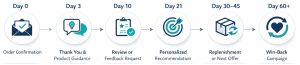
Within the next few days, a second message can thank the customer and provide practical value. For a physical product, that may be setup, care, or usage guidance. For a service, it may be onboarding, next steps, or access information. HubSpot’s post-purchase framework supports using this early window to reinforce confidence while excitement is still high.
Once the customer has had time to experience the product, a third message can request feedback or a review. That creates social proof and gives you a chance to detect dissatisfaction early.
Later in the cycle, send a personalized recommendation, cross-sell, or replenishment prompt based on expected need. BigCommerce and BigCommerce support documentation both support using purchase history and customer groups to drive this type of targeted follow-up.
If the customer still has not returned, the final stage is reactivation. A win-back message should acknowledge the gap, offer a relevant reason to return, and make the next action simple. Google’s retention goal makes this stage especially important because re-engaged customers are a distinct lifecycle opportunity, not an afterthought.
FAQ
How many customer follow up campaigns should you send after a first purchase?
There is no universal number. The right volume depends on the product, purchase cycle, and customer behavior. Most brands need more than a single thank-you email but fewer than an aggressive daily sequence. A practical approach is to send only when each message has a clear purpose, such as confirmation, education, feedback, replenishment, recommendation, or reactivation.
What is the best time to send a post-purchase follow-up email?
The first follow-up should usually be immediate because order confirmation and reassurance are time-sensitive. After that, timing should be based on expected customer needs, such as delivery, setup, first use, depletion, or inactivity. Trigger-based timing is usually stronger than fixed calendar timing.
Can customer follow up campaigns work for service businesses as well as ecommerce brands?
Yes. Service businesses can use follow-up campaigns for onboarding, appointment reminders, progress check-ins, review requests, renewal prompts, referral invitations, and reactivation. The lifecycle principle is the same: guide the client from first transaction to ongoing relationship.
What is the difference between a follow-up campaign and a win-back campaign?
A follow-up campaign is a broad category that includes any post-purchase communication designed to move the customer forward. A win-back campaign is narrower. It targets customers who have already gone inactive and tries to restore engagement or purchases.
Should customer follow up campaigns include discounts?
Sometimes, but not by default. Discounts can drive action, especially in reactivation or replenishment campaigns, but they should not replace value. Many follow-up campaigns perform better when they reduce friction, provide education, or make the next step easier without immediately training customers to wait for a coupon.
How do you know whether a follow-up campaign is increasing repeat purchases?
Track repeat purchase rate, time to second purchase, retention, reactivation, and lifetime value. Use campaign-level engagement metrics as supporting signals, but judge success primarily by customer behavior and revenue over time. Google Analytics’ retention and user lifetime views are especially useful for this.
Conclusion
Customer follow up campaigns turn one-time buyers into repeat clients when they are built as a lifecycle system rather than a one-off email tactic. The most effective campaigns reassure customers after purchase, help them succeed, invite meaningful engagement, and create relevant opportunities to buy again. Over time, that process strengthens retention, increases lifetime value, and makes acquisition spend work harder.
Brands that win at retention do not wait for customers to come back on their own. They follow up with purpose, use customer behavior to guide timing and messaging, and measure success by repeat revenue instead of vanity metrics. That is how follow-up becomes a growth channel instead of an afterthought.
Why QBall Digital is Your Ideal Choice for Customer Follow Up Campaigns?
QBall Digital helps brands turn follow-up into a measurable lifecycle marketing engine. Instead of relying on generic “checking in” emails or disconnected automations, QBall Digital builds customer follow up campaigns around the moments that actually shape repeat buying: the first post-purchase interaction, onboarding, product usage, replenishment timing, loyalty development, and reactivation. That means every message has a clear job, a clear audience, and a clear business outcome.
Just as importantly, QBall Digital approaches retention with performance discipline. The goal is not to send more messages. The goal is to move more first-time buyers toward a second purchase, increase customer value over time, and connect lifecycle marketing to revenue. By combining segmentation, conversion-focused messaging, automation strategy, and data-driven optimization, QBall Digital helps businesses build follow-up systems that feel more relevant to customers and more profitable to the brand.
Ready to Build Smarter Customer Follow Up Campaigns with QBall Digital?
If your business is putting most of its effort into winning the first sale, QBall Digital can help you build the follow-up strategy that earns the second, third, and fourth. From post-purchase sequences to reactivation campaigns, QBall Digital creates lifecycle marketing systems designed to strengthen retention, increase repeat purchases, and grow customer lifetime value.